Life happened because I turned the pages~~Alberto Manguel

Wednesday, September 27, 2006

The Paolini Effect

Nancy Li Fan makes Christopher Paolini look like a doddering greybeard.

The Observer reports:

A fantasy novel about tribes of warring birds, written by a gifted 11-year-old girl who lives in the southern-most province of China, is to be published worldwide in English.
The young author, Nancy Yi Fan, won the extraordinary opportunity by simply emailing her manuscript to the chief executive of HarperCollins, Jane Friedman, at the publisher's New York office.
Fan has since been hailed as a prodigy by her editors who will use her book in a new attempt to establish the firm in China . Her story, Swordbird, is an epic allegory about the struggle for peace and will be printed in this country in the new year.


No offence to Fan, who may well be a child prodigy. But this looks like the Paolini Effect at work: the backstory sells the book, and unless it's putrid-terrible, what kind of evil reviewer would slag off an 11-year-old author?
And well, on one hand, more power to Li Fan and Paolini: at eleven and 16 respectively, most of us were scraping the chewing gum off our pigtails, not signing book deals. But does anybody remember, say, Flavia Bujor? Teen sensation, wrote The Prophecy of Stones at the age of 12? Or Catherine Webb? Neither did badly with their "teen sensation" books, but both became the publishing industry equivalent of the two-or-three hit boy/ girl bands.
This CSM story explored what happens when the very young write that first book.

Tuesday, September 26, 2006

The General in his Labyrinth

This month's bestselling Asian author?
General Pervez Musharraf.
Among the long and growing list of people who won't be queueing up for autographs now that they've read his memoirs:
The Indian Army.
The CIA.
Manmohan Singh.

On the other hand, he has George Bush on his PR team, though Bush might leave the position now that he's actually read the book.

Sincerely, Mr Rushdie

Salman Rushdie writes to Amitava Kumar:

"Dear Mr Kumar,

My attention has been drawn to your website, where you claim that I threatened to cancel my visit to Vassar if you were involved with it. This is inaccurate. At no time did I threaten anything of the sort. I did indeed tell the organizer, Joanne Long, that I was unwilling to share a stage with you, and, after she had read what you have written about me in the past, she understood why I would have that view, and asked you to stand down. It might have been more dignified of you to leave this matter private, but as you have chosen not to do so, you ought at least to strive for accuracy in your reporting of it."

Amitava had prepared a generous introduction for Rushdie, but hasn't been quite as generous in the past, as in this piece on Rushdie and Naipaul and this review, which begins with the question: Is Salman Rushdie God?
Amitava is well within his rights to dissect Rushdie's work in the manner he's done in the past, even if a lot of it has been a glorification of Naipaul at the expense of Rushdie. And Rushdie is well within his rights to decline to share a stage with a gadfly reviewer. Bit silly of the man to put his thin skin on display, though.

Kiran and Kalimpong

The Toronto Star interviews Kiran Desai:

"Is it really such a brave new world?" asks the novelist on a recent afternoon in Manhattan, her brow crinkling. "I don't know if anybody would say so right now, but when I look at globalization right now it seems like a very old story. And it seems pretty rotten."....
...Desai can relate to feeling trapped, however. She grew up in Delhi when that town felt cut off from the world.
"There was the feeling that books were the only thing that led you to the world," she says. "You read really hard; that was the only thing you could do."


And Jayaditya Gupta reads The Inheritance of Loss and sets off on a pilgrimage to Kalimpong, the small town in the hills that he remembers as well as Desai does:

I knew I shouldn’t have read the book. It was a trip I didn’t have the time for just then, a trip that, once started, would (and did) take me down many different roads. But when you gotta go, you gotta go, and so I went, courtesy Kiran Desai, back to Kalimpong, where I’d spent at least one holiday every year...
The best chronicler of Kalimpong’s ghost stories was the raconteur and illustrator Desmond Doig, and one of his stories dealt with Mr and Mrs Dench and their undying (literally) love for each other. The house they lived (live?) in is now occupied by Desai’s aunt; a handsome structure, stone facade, glass-and-iron front door, dark wood floors, wonderful smoky kitchen. Mr Dench died first; his food was left on the table, waiting for him. Mrs Dench descended into ill health and dementia and the nuns took her away. Yet they linger; voices have been heard where there are no people.
The spirits have been malicious—scratching and slapping—and benevolent, waking up an ayah when the fireplace had got blocked and the room, where she was sleeping with the family’s children, was full of carbon monoxide. They are part of the dark underside of a town like Kalimpong, as much as the ethnic mix and caste structure that would, from time to time, rip apart the lace-and-fineness in particularly bloodthirsty fashion. A couple of centuries ago it was the scene of bloody wars between the hill tribes. Indeed the house Desai’s parents bought was the scene of a massacre a couple of centuries ago.

Royal Runaround

Kishore Singh, if you don't know the byline, is something like the Galahad Threepwood of India--generations of Rajput royalty have shuddered at the idea that he might finish writing his memoirs/ history of Rajasthan. He has all the gossip on the season's most interesting book about commoners and kings:


What’s getting everyone’s knickers in a twist now is Javier Moro’s book (Passion India, Full Circle, Rs 295) about the Spanish commoner who married the sophisticated Francophile Maharaja Jagatjit Singh of Kapurthala....
[Anita] Delgado, who came to India with visions of leading a gay life with a man she didn’t really love, or love enough (thinking him some “Moorish prince”), learnt soon enough that her position as his fifth wife, a commoner and a foreigner was far removed from their giddy courtship in Madrid and Paris.
She was rejected by the women of the zenana and by the status conscious British, and in the absence of friends to spend her days with, she resigned herself to luxurious isolation till, seeking companionship elsewhere, she seduced or was seduced by her stepson, Karamjit, the maharaja’s favourite son from his fourth wife, Rani Kanari.
The maharaja was persuaded by Mohammad Ali Jinnah not to make the affair public. Eventually, Delgado was exiled with an extremely handsome settlement, and went on to lead a luxurious (and not entirely lonely) life in Paris.

Monday, September 18, 2006

Vikram Seth leads fight for gay rights

"There should be no discrimination in India on the grounds of sexual orientation. In the name of humanity and our Constitution, this cruel and discriminatory law should be struck down." (signed Vikram Seth, Swami Agnivesh, Soli Sorabjee and over a hundred prominent Indians).
Section 377, in case you didn't know, is a 145-year-old law that effectively criminalises gay relationships. Prof Amartya Sen calls the law "a colonial-era monstrosity"; the Delhi High Court will rule on Section 377 next month. Earlier this year, in January, Seth was blunt, calling the law "barbaric". His voice should make a difference; he's one of the most respected writers from the country.

And I still like this relatively early Seth poem:

Dubious

Some men like Jack and some like Jill
I'm glad I like them both but still
I wonder if this freewheeling
Really is an enlightened thing,
Or is its greater scope a sign
Of deviance from some party line?
In the strict ranks of Gay and Straight
What is my status: Stray? Or Great?

Thursday, September 14, 2006

The WTF Booker shortlist

No, really. I'm thrilled that The Inheritance of Loss, Kiran Desai's second novel, made it to this year's Booker shortlist--but what a shortlist it is. M J Hyland and Hisham Matar weren't available in India up until this week, and I've only just started Edward St Aubyn's Mother's Milk. Kate Grenville, Kiran Desai, Sarah Waters--all three have strong novels. I can understand dissing Peter Carey and Nadine Gordimer at a pinch, but David Mitchell didn't make it? And what, no Claire Messud?? But then again, I've been looking forward to Hyland's novel--and Matar can write. So perhaps this year's Booker judges actually read their way through the slush pile for a change...


Booker Prize 2006: shortlist


Kiran Desai, The Inheritance of Loss (Hamish Hamilton)
Kate Grenville, The Secret River (Canongate)
M J Hyland, Carry Me Down (Canongate)
Hisham Matar, In the Country of Men (Viking)
Edward St Aubyn, Mother's Milk (Picador)
Sarah Waters, The Night Watch (Virago)


Quick update:

--The Guardian on Kiran Desai going from "virtual unknown" (really? The Inheritance of Loss got strongly positive reviews when it was released a few months ago) to "potential Booker winner". "The first book took four years to write, the next eight, so I guess the third will take 16," she says, with a wry smile. "Then it will soon be time to retire."
--Peter Carey may not have made it, but the Aussies aren't complaining.
--Boyd Tonkins pulls out every blasted racing metaphor--heavily-backed steeds falling at the first fence, also-rans, the publisher's gallop on a separate track--so that you don't have to. Not that I blame him, something about The Booker sends every one of us hack writers off to the Racing Form for inspiration.
--The Times wonders why David Mitchell didn't make it.

Saturday, September 09, 2006

The Gospel by the bushel

I never thought you could quantify missionary zeal, but apparently you can:

According to this news story, Hodges Ministries has 1.6 million pounds worth of Christian literature--tracts, Bibles, pamphlets, psalms etc--waiting to be exported. "For instance, a 40-foot shipping container was to go out this week to India, where Christians number 2.3 percent of the population.... In 2005, the mostly volunteer work force sent nearly 1.2 million pounds of Bibles and other Christian materials to dozens of countries."

What we read and why

The inimitable Mukul Kesavan looks at the reading habits of English-speaking Indians, then and now:

Our reading was closely connected to the unspoken contract our parents had with the schools they sent us to: we were to be socialized into English for all the reasons that Macaulay had specified more than a century ago. As a consequence, we learnt to love the superior rituals of an English childhood: boarding-school codes (Bunter, Jennings, St Clare’s); countrified adventure (the Famous Five); urban mysteries complete with constable (the Five Find-Outers). Later, we enjoyed at one remove, the excitement of colonial/Western derring-do (Henty, MacLean) and modern love (Denise Robins, Mills & Boon)....
My anecdotal research reveals that nearly everything boys read today can be classed as fantasy.... I suspect my generation didn’t need generic fantasy because our imaginations were already stoked by the post-colonial fantasy of living English lives. Bunter and Jennings and Kirrin Island and scones were as dreamily strange and wonderful as Brian Jacques’s canned English countryside, teeming with warrior mice, talking badgers and scheming rats must seem to my son.

Wednesday, September 06, 2006

Fay finds God, loses marbles

The "Jesus is coming" fridge magnet is fine; the "Your man's coming, so you'd better fake it" message to women would be offensive if Camille Paglia said it.

But this is Fay Weldon writing about The Joy of the Fake Orgasm and why women should feel more guilt.

The backlash has begun.

Gyorgy Faludy dies

Hungarian poet Gyorgy Faludy has died at the age of 96; this was one of the last interviews he gave.


Learn by heart this poem of mine


Learn by heart this poem of mine;
books only last a little time
and this one will be borrowed, scarred,
burned by Hungarian border guards,
lost by the library, broken-backed,
its paper dried up, crisped and cracked,
worm-eaten, crumbling into dust,
or slowly brown and self-combust
when climbing Fahrenheit has got
to 451, for that's how hot
your town will be when it burns down.
Learn by heart this poem of mine.

Learn by heart this poem of mine.
Soon books will vanish and you'll find
there won't be any poets or verse
or gas for car or bus - or hearse -
no beer to cheer you till you're crocked,
the liquor stores torn down or locked,
cash only fit to throw away,
as you come closer to that day
when TV steadily transmits
death-rays instead of movie hits
and not a soul to lend a hand
and everything is at an end
but what you hold within your mind,
so find a space there for these lines
and learn by heart this poem of mine.

Learn by heart this poem of mine;
recite it when the putrid tides
that stink of lye break from their beds,
when industry's rank vomit spreads
and covers every patch of ground,
when they've killed every lake and pond,
Destruction humped upon its crutch,
black rotting leaves on every branch;
when gargling plague chokes Springtime's throat
and twilight's breeze is poison, put
your rubber gasmask on and line
by line declaim this poem of mine.

Learn by heart this poem of mine
so, dead, I still will share the time
when you cannot endure a house
deprived of water, light, or gas,
and, stumbling out to find a cave,
roots, berries, nuts to stay alive,
get you a cudgel, find a well,
a bit of land, and, if it's held,
kill the owner, eat the corpse.
I'll trudge beside your faltering steps
between the ruins' broken stones,
whispering "You are dead; you're done!
Where would you go? That soul you own
froze solid when you left your town."
Learn by heart this poem of mine.

Maybe above you, on the earth,
there's nothing left and you, beneath,
deep in your bunker, ask how soon
before the poisoned air leaks down
through layers of lead and concrete. Can
there have been any point to Man
if this is how the thing must end?
What words of comfort can I send?
Shall I admit you've filled my mind
for countless years, through the blind
oppressive dark, the bitter light,
and, though long dead and gone, my hurt
and ancient eyes observe you still?
What else is there for me to tell
to you, who, facing time's design,
will find no use for life or time?
You must forget this poem of mine.

Tuesday, September 05, 2006

With love, (Mrs) Ever Been Had

Bevis Hillier, author of a three-volume biography of the poet John Betjeman, has confessed he was responsible for sending a hoax letter, apparently written by Betjeman, to fellow biographer and bitter rival A N Wilson. Wilson printed it in the book, without noticing a niggling detail the Sunday Times caught:

The Sunday Times broke the story:

The letter begins: “Darling Honor, I loved yesterday. All day I’ve thought of nothing else. No other love I’ve had means so much.”
Later on in the letter the poet waxed that “love has given me a miss for so long and now this miracle has happened. Sex is a part of it, of course.”

Betjeman then ended the letter: “Tinkerty-tonk, my Darling. I pray I’ll hear from you tomorrow. If I don’t I’ll visit your office in a fake beard. All love, JB.”...
...The trick was so successful that the letter has been published in Wilson’s new book Betjeman as evidence of the poet’s previously unknown “fling”.
The giveaway — and a clue that a bitter rival of Wilson’s may be behind the trick — is that the capital letters at the beginning of the sentences in the letter spell out a vivid personal insult to the biographer."

They spell out 'A N Wilson is a shit', to be precise, which have been Bevis Hillier's sentiments towards Wilson ever since the latter slammed Hillier's three-volume biography of Betjeman, before embarking on his own version. As several gleeful reporters pointed out, the "Betjeman letter" was sent to Wilson by a lady who identified herself as Eve de Harben, which is an anagram for "Ever Been Had".

Hillier, who may or may not be a good biographer, but is on current evidence an excellent acrostics man, is unrepentant. Wilson hasn't said much about the affair--he's busy trying to recall copies of his Betjeman biography.

Asia's invisible writers


In The Nation, John Fefer covers Writers From The Other Asia. The day after reading this, I did my standard darshan of Delhi's bookshops for the week, but this time I made a deliberate effort to look for authors from Korea, Japan, China and the rest of Asia.
In the rare and secondhand bookshops, you still get a lot of the overflow from India's flirtation with communism--pamphlets, books on the military supremacy of Japan, badly translated Chinese folk tales, plus the usual Venerated Leaders hagiographies.
But in most mainstream bookshops, you'll find a reasonable smattering of authors from the subcontinent--though even here, some of the best-regarded names from Pakistan or Sri Lanka are missing--but very little from the rest of Asia. There are Asian authors, of course, from Haruki Murakami and Gao Xingjian to Banana Yoshimoto and Jung Chang--everyone, in short, who has been discovered by the English-speaking world, but not necessarily those who're famous in their own countries.

Fefer writes:


"While Japanese and Chinese literatures have established footholds in intellectual circles here--from the classics of Sun Tzu and Junichiro Tanizaki to Nobel laureate Gao Xingjian's Soul Mountain and the postmodern fictions of Haruki Murakami--Korean literature remains terra incognita. Japan and China, of course, built empires. Korea suffered the indignities of colonialism at the hands of its neighbors and now endures the frustrations of relative cultural invisibility in the eyes of the West. American novelists such as Chang-Rae Lee and Nora Okja Keller have drawn inspiration from Korean material, but no Korean author has become a household name in the United States--despite the brilliance of Yi Munyol's meditation on authoritarian psychology in Our Twisted Hero or Ahn Junghyo's blistering portrait of South Korea's involvement in the Vietnam War in White Badge."


It's a comprehensive piece, providing an overview of a literature of which most of us, the Babu included, know absolutely nothing, via the review of four recently published works. Fefer has an interesting explanation in passing for why Korean literature hasn't been more popular:

"Korean culture has a certain pungency that complicates its entry into the global mainstream. Korean movies, traditional songs and fermented dishes are acquired tastes."

Why I love press releases

Because, every so often, I find something like this:


Uniqueness of Dr. Prabhu’s books – “The Cosmic Clues” and “The Astral Alibi”

(Two claims are pretty standard--it's different, the protagonist is different:)

· The main protagonist or the Sleuth/Detective/Private Investigator in both these books is a young Indian female breaking the stereotype of Male detectives.
· The novels portray a modern, contemporary India, and really move away from the usual Indian Fiction published abroad.

(But there's also this:)

· This is for the first time Scientific Indian Vedic Astrology is coupled with Investigative Techniques or Crime Solving Methods in Literature.

Bet you never thought of that, Sherlock Holmes.

Badami's 1984 novel


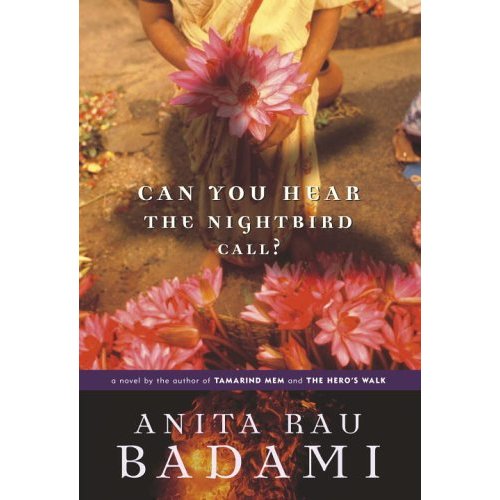
If you've read Tamarind Mem or The Hero's Walk, you've probably been waiting for Anita Rau Badami to come out with a third novel. Can You Hear The Nightbird Call? has just been released in Canada--I don't know whether she intended the resonance, but the title immediately made me think of Khushwant Singh's I Shall Not Hear the Nightingale, they could easily be the first and second lines of a Lyrical Indian poem.

Canada.com has a report:

Can You Hear the Nightbird Call? (Random House), Badami's third major work of fiction, is a richly textured story that follows the lives of three women, set against a background of watershed events in India's - and ultimately Canada's - recent history: the 1947 partition of India and Pakistan; the Indian army's invasion of Sikhism's holiest shrine, the Golden Temple in Amritsar; Gandhi's assassination four months later by two Sikh bodyguards; and the 1985 Air India bombing, the largest mass murder in Canadian history.


The Globe and Mail interviewed Badami:

Writer Anita Rau Badami was honeymooning in New Delhi when Indira Gandhi was assassinated by her Sikh bodyguards in 1984, and amid the ensuing tumult she saw the corpse of a man who had been burned alive by the Hindu thugs who took revenge on any Sikh they could find. The following year, Badami's neighbour from her home in Chennai in southern India died in the terrorist bombing of Air India Flight 182, and his disconsolate widow committed suicide.

It's a challenging period of history, and it should be interesting to see how Badami fictionalises this. I'm trying not to be put off by the sari-and-flowers cover; with Badami, it's what's inside that usually counts.

You all look like Gunga Din to me


(The cartoon, as most of you will know, is by the bright boys over at Badmash--if you're not already a fan of their work, go there NOW.)

Without comment, I refer you to Stephen Thompson's Sacred Games review, which explains why all brown people write the same damn way. Using Midnight's Children and A Suitable Boy as examples of novels that resemble each other might not have been the greatest way to make his point--they belong to the Great Indian Family, sure, in just the same way Brilliant Cousin Diku who ran away to become a circus ringmaster resembles Maya didi's son Tuku who topped the ICS exams and took a year off to discover his nation.

Thompson:

THERE are certain books that are so similar to one another they almost beg to be grouped together. This is largely true of Indian novels. Look closely at the ones published in the past, say, 25 years, and you'll see that they're virtually identical, in theme if not in style and content.
For me, Midnight's Children is indivisible from A Fine Balance, which in turn cannot be separated from A Suitable Boy. Directly or indirectly, all three books - and there are other notable examples - are concerned with the same thing: the state of Indian society in the wake of independence and partition. In his long-awaited new novel, trumpeted by the publishers as seven years in the making, Vikram Chandra must be given credit for writing against this traditional grain.


It's a bit like saying Philip Roth, Jonathan Franzen and John Irving have this tendency to set most of their work in... contemporary America, isn't that odd? And strangely enough, Chinua Achebe, Wole Soyinka and Nadine Gordimer have all tackled the history and present-day concerns of the African continent--that can't be a coincidence, right?

"Bismillah of Benares"

Ramachandra Guha pays tribute to the late Ustad Bismillah Khan in The Hindu:

IN a delicious paradox that can only be Indian, the man who best embodied the spirit of the holy Hindu city of Varanasi was a Muslim. Although he was born in Bihar, Bismillah Khan moved to Varanasi as a young man, and lived there until he died, spending some seven decades in an old, crumbling haveli, surrounded by his shehnais, a large extended family, and an even larger circle of hangers-on...
... That a Muslim musician personified Kashi so stuck in the gullets of Hindu bigots. Not that the orthodox Muslims had much time for Bismillah either. In the wonderful documentary that Nasreen Munni Kabir made of him — whose title I have stolen for this column— Bismillah explains how for some mullahs, music is the work of the Devil, haram. "Harrraaam", he repeats, and then cackles delightedly.

Sujalaam Sufalaam Malayaj Sheetalaam...


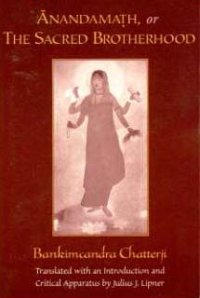
The controversy over the compulsory singing of India's national song, Vande Mataram, continues. Meanwhile, Indrajit Hazra settles down to read Bankimchandra in a Scottish pub:

Today Vande Mataram retains its iconic status, but like the resounding anti-semitism in Shakespeare’s The Merchant of Venice or in Wagner’s The Ring Cycle, there’s the niggling business of it being anachronistic in an embarrassing way. The poem/song was written purportedly as a ‘page-filler’ for the magazine Bangadarshan in 1875, six years before Anandamath was serialised in the same magazine and seven years before the novel was first published as a book. (Which makes it rather strange that rumpus-meister Arjun Singh wants to ‘celebrate’ the ‘centenary of the song’ on September 7.)
One can’t get around the fact that Anandamath, the receptacle where Vande Mataram found its textual home, is vicious against “these bearded degenerates” and “the baldies”. But it’s not so much the text itself, even with its cult of Shakti used as nationalism used as a nationalistic-religious force that (has) unsettled some Muslims. It’s who has used Bankim and Vande Mataram and Anandamath and to what end that sends people pressing the secular emergency button every now and then.


Vande Mataram was taboo in England for very different reasons, of course. Here's Manohar Malgaonkar on the subject:

DECEMBER 22, 2002. People who had been listening to BBC’s morning programme must have thought they had got the wrong channel. The radio was playing Vande Mataram.
This couldn’t be true, you told yourself. Had the mandarins who run the BBC gone mad? Did they not know that when the British were ruling India, the song Vande Mataram was banned? That is Rudyard Kipling’s India, those who sang it were classified as ‘anarchists’, and that even to say the two words Vande Mataram was a criminal offence for which the usual sentence was a still jail term...
...It all seems to be a part of the BBC’s 70th birthday Bash. As part of the celebratory programmes, the BBC was going to broadcast the Top Ten popular songs of the past 70 years, and invited its listeners to give their votes. Vande Mataram turned out to be one of the most popular — indeed it only just missed being the top song, which was an Irish number called ‘A Nation once again! Song number 3, incidentally was ‘Dil, dil, Pakistan.’

Naguib Mahfouz (1911-2006)

Naguib Mahfouz died last week at the age of 94, after suffering a fall and sustaining head injuries. The obituaries have been pouring in:

The Guardian: Modern Arabic literature achieved international recognition when Mahfouz was awarded the Nobel prize in 1988, and it is difficult to think of any prizewinner whose status as a writer was so dramatically changed as was that of Mahfouz by the award.

Tahar Ben Jelloun writes in The New York Times:

Installed at his regular table at his regular café in Cairo, Egypt, a daily rendezvous that only illness could cancel, Naguib Mahfouz observed the anonymous crowd swarming the city streets with an eye that was tolerant, humane, sometimes ironic or arch, but never malicious....
...From a Western perspective, it is difficult, I imagine, to understand the cultural power these novels exerted. Even before Mahfouz won the Nobel Prize in 1988, the trilogy had the effect of liberating a generation of Arab writers. Young writers like Haydar Haydar and Fadhil al-Azzawi didn't write like Mahfouz, but his books and his stature gave them the confidence to persevere in examining everyday life.

In The Nation, Laila Lalami looks at Mahfouz's defence of Rushdie during the Satanic Verses affair:

Mahfouz opposed the fatwa as essentially un-Islamic and stated clearly his defense of freedom of expression. But in 1992 he appeared to shift his position slightly, saying that, while the fatwa was intolerable, Rushdie's novel was "insulting" to Islam. Why Mahfouz, who in 1959 produced a novel (Children of Gebelawi) that portrays God, Adam, Moses, Jesus and Muhammad as mere mortals, should have found The Satanic Verses to be offensive is a bit of a mystery. In any case, Islamic fundamentalists, bent on waging a culture war, turned against Mahfouz, precisely because of Children of Gebelawi. In 1994 he was stabbed in the neck and as a result of his injury he was unable to hold a pen or a pencil in his writing hand.

Mahfouz's 1992 interview with the Paris Review can be downloaded here: "At my age it is unseemly to be pessimistic. When you are young you can declare there is no hope for mankind, but when you are older, you learn to avoid encouraging people to hate the world."

India's prime minister Manmohan Singh met Mahfouz in 1988:

Our conversation in the coffee house turned to Rabindranath Tagore. Everybody in the Indian Mission had told me about Mahfouz's fondness for Tagore. I had framed many questions in my mind before I met him. Like which work of Tagore did he like best? Did he read Tagore in Arabic translations or in English? When did he last read a major work of Tagore?
"I read Tagore every morning, like a prayer," Naguib Mahfouz interrupted me. After that I knew no more questions needed to be asked except, perhaps, what so fascinated him about Tagore. He clinched that in a short sentence: Mahfouz liked Tagore because Tagore was the soul of the world. Tagore lived in the cosmos, Mahfouz emphasised, and was its very soul.


The Nobel Prize archive has speeches, an interview, a bibliography and other resources: "I was told by a foreign correspondent in Cairo that the moment my name was mentioned in connection with the prize silence fell, and many wondered who I was. Permit me, then, to present myself in as objective a manner as is humanly possible. I am the son of two civilizations that at a certain age in history have formed a happy marriage. The first of these, seven thousand years old, is the Pharaonic civilization; the second, one thousand four hundred years old, is the Islamic one. I am perhaps in no need to introduce to any of you either of the two, you being the elite, the learned ones. But there is no harm, in our present situation of acquaintance and communion, in a mere reminder."

The Complete Review has several of his books under review--as you can see, the quality of his work varied very widely, from the acclaimed Cairo Trilogy to stodgier, more exasperatingly allegorical works.

Bookstore speed dating

While the Babu was away, other, more conscientious bloggers were working hard for a living. Bookslut Jessa Crispin took on the assignment from hell:

There used to be some sort of myth that a bookstore was the best place to meet a man. But last time I was in a bookshop a fifty-year-old with a nasty sunburn sat across from me as I read my Francine Prose and leered when I accidentally made eye-contact—and that’s the closest I’ve come to “meeting a man” in a bookstore. And yet, when I read that the Book Cellar, a local independent in Chicago that sells wine and cheese along with books, was hosting a speed-dating night I was actually pleased: Shy readers meeting other shy readers! That actually sounds like a good idea!


Or maybe not:

During the break, I wandered by the line for the bathroom, and the women looked shell-shocked. “How’s it going?” I asked. Women nearly crumpled into piles on the floor. “Who are these people?” one woman holding an Alex Kotlowitz book asked me. Joanne had been quizzing the men about what their favorite books were, and the responses were interesting. “One said his favorite author is Donald Trump,” she told me. I guessed that had been a certain balding accountant, and I was right. “But he’s not even like a real accountant,” Joanne said, gripping my arm. “He’s in payroll.”


My favourite bookstore hearts-and-violins memory? Small, respectable bookstore, Lucknow, where a paunchy man wearing huge dark sunglasses in the middle of the day and sporting a red handkerchief in his shirt pocket plus a booger in the appropriate cavity sidled up to me. "You are reader?" I mumbled something vaguely affirmative. "You want to make friendship?" I answered distinctly, in the negative. "Ok, ok."

Two minutes later, as I'm browsing stacks of Urdu poetry and memoirs, a hand rises up from behind the shelf. It's holding a copy of The Story of O. "You have read this book? Very very good book. About woman and her life." I glared at him and indicated I was busy. A minute later, another book was thrust before my eyes. A Nick Carter paperback, the one with the woman on her knees who's paying particular attention to the hero's belt. "You have read, no? Very very good book." I ignored him. He disappeared for a while, clearly rethinking his strategy. Then he came back triumphantly with more local fare. This one was a Hindi pulp fiction classic--Pavitra Nari ki Ajeeb Kahani (The Unusual Adventures of a Virtuous Woman)--which featured a lady on the cover who leered, virtuously, out at the reader, clad in a perfectly inadequate blouse-and-lehenga outfit. She was very well-built. "You have read? This is very very good book.." he began.

This was in the pre-Suitable Boy and Sacred Games era, so I couldn't find what I was looking for in the fiction section. There was, however, a massive atlas to hand. I hefted its weight meaningfully. "You have read this?" I said. "Very very good book. And if you don't leave me alone, I'm going to hit you over the head with it." Lothario looked deeply wounded, but he left.