Life happened because I turned the pages~~Alberto Manguel

Monday, August 29, 2005

Slash. Burn. Pillage. Ah, Ruchir's back.

I'm not going to quote from Ruchir Joshi's piece in The Kolkata Telegraph. It would be a little like describing, in slow motion, the punches thrown by Evander Holyfield as the gentle thudding of felled bodies fills the air--much more fun if you see for yourself. But before he gets down to brass knuckles and wracks up a star cast of casualties (Naipaul, Rushdie, Dalrymple...), there's this:
Across the quarter-century that Garcia Márquez struggles, contemporaneously with other unknowns such as Mario Vargas Llosa, Julio Cortázar and Carlos Fuentes, there is only one name from the entire continent of South America that is properly recognized in world literature — Jorge Luis Borges. This doesn’t stop the marginal writers and critics from writing, reading, dreaming and banging café tables as they sit over their coffees and beers arguing at regular tertulias — the South American version of the adda.

When to stay MIA

From Sebastian Faulks' review of Stuart Kelly's The Book of Lost Books:

One of the best stories in Stuart Kelly’s excellent account of all the great books that have been lost to posterity concerns the 4th-century BC Greek dramatist Menander. He was revered by Julius Caesar and Quintilian among others as second only to Homer — a sort of early realist, witty, humane and profound. He was the source of the only non-scriptural quotation in St Paul’s writing, and, although all his work had been lost, he enjoyed a holy place in the critical pantheon for more than two millennia.
Then, in 1905, fragments of five of Menander’s plays, including Dyskolos, turned up in Egypt; 50 years later the rest of Dyskolos surfaced in Geneva. The masterpiece was lovingly pieced together, translated and, finally, produced and broadcast by the BBC in 1959. It was awful.

Whither the novel?

Iris Murdoch and John Bayley called it "Whithering": the process of attending conferences where everyone solemnly held forth on questions like the above. We have a few answers:

1) Prufrock's Page quotes Amitav Ghosh (tried the Mumbai Mirror link, but it's not working):

"Naipaul has reached the end of his fictional capacities, which is what he is saying. I am a great admirer of Naipaul. But this is such a strangely disingenuous thing to say...He's run out of material so he thinks that the novel as a form is finished."
He goes on: "The world has always been a complicated and difficult place...It's true that there have been terrible incidents of terrorism recently. But what are these compared to the second or first world war or even the cold war? There are a thousand times you can think of when the world was a lot more complicated, when there was more violence. For the West, terrorism is new. We, in India, have lived with it for 20 years...This does not kill fiction. The more complicated the world becomes, the greater is the need for it. Fiction explains the world, gives a shape to the world, represents it, makes it understandable. Fiction is essential. People have been declaring the death of the novel for at least 70-80 years. The novel has not only not died but is, in fact, flourishing..."


2) Amazon.com thinks short stories might be the way to go. They're offering brand-new work at 49c a throw. Audrey Niffenegger, Pico Iyer, Ann Beattie, Robert Silverberg, Michael Swanwick, and much more.

3) And Scott Sigler is podcasting his new novel. Podiobooks has five more titles.

4) Tim Clare knows that everyone has a novel in them, and argues that's where it should stay.

Thursday, August 25, 2005

Throw the book at them

From The New York Times:

Correction: Aug. 24, 2005, Wednesday:

A chart in The Arts on Tuesday with an article about "Hunger's Brides,'' the 1,360-page first novel by Paul Anderson, rounded the figure for its weight imprecisely. The book weighs 4 pounds 9 ounces, not quite 4 3/4 pounds.

majQa' (oh, look it up in Klingon)

McSweeney's, we never fell out of love with you. No, really, we were just too busy to write.

From Mike Richardson-Bryan, Klingon Fairy Tales:

"Snow White and the Six Dwarves She Killed With Her Bare Hands and the Seventh Dwarf She Let Get Away as a Warning to Others"

"There Was an Old Woman Who Lived in a Shoe With a Big Spike on It"

The Guardian First Book Award longlist

The Guardian First Book Award longlist is out, and I like it the balance between fiction and non-fiction. Haven't read some of the books; Richard Benson's The Farm, Nick Laird's poetry (do not call him Mr Zadie Smith, he's heard it before), Diana Evans' 26A and Wesley Stace's Misfortune aren't available here yet. Suketu's Maximum City and Alexander Masters' Stuart were both on the Samuel Johnson shortlist as well; both ranked among the best books I'd read in the last twelve months.Blogcritics has a comprehensive interview with Reza Aslan. Joanna Kavenna's quest for Ultima Thule got a stellar review from Jenny Diski. I've already blogged a little bit about Rattawut Lapcharoensap, but here's a review of Sightseeing anyway. Just started reading Tash Aw's The Harmony Silk Factory, and have to admit I'm a little underwhelmed, but perhaps it's just, as this reviewer suggests, a trifle inscrutable at first reading.

From The Guardian:
No god but God: The Origins, Evolution and Future of Islam
Reza Aslan
(Heinemann)

A history and analysis of the Islamic faith from the position of an Iranian-American Muslim. Non-fiction

The Farm
Richard Benson

(Hamish Hamilton)

The story of the late 20th-century destruction of the British farming industry told through the experience of one Yorkshire farming family. Non-fiction

Stuart: A Life Backwards
Alexander Masters
(Fourth Estate)

The funny, irreverent and passionate story of a 'chaotic homeless man' as told by the young care worker who befriended him. Non-fiction

Maximum City: Bombay Lost and Found
Suketu Mehta
(Headline/Review)

A stunning history of the city by a young Indian journalist. Non-fiction

The Ice Museum
Joanna Kavenna
(Viking)

A young writer goes in search of 'Thule', the perfect north, and examines the myths and stories associated with it. Non-fiction

To a Fault
Nick Laird

(Faber)

Poems of family and identity by a talented new Irish poet. Poetry

26A
Diana Evans

(Chatto and Windus)

A tale of mixed-race twins in multicultural west London. Fiction

Sightseeing
Rattawut Lapcharoensap
(Atlantic)

Tourism as seen by the Thais. Fiction

Misfortune
Wesley Stace

(Cape)

A historical romp featuring cross-dressing and ballads, written by a musician. Fiction

The Harmony Silk Factory
Tash Aw
(Harper Perennial)

Three men from China, Japan and England and a Malaysian woman go into the pre-second world war jungle with devastating effects. Fiction

Tuesday, August 23, 2005

Pocket Penguins: Seven in the hand

If you're experimenting with reading the Pocket Penguins in the listed order, be aware that this is serendipitous but also absolutely illogical. Not to mention jarring: it would never have occurred to me to follow up Marian Keyes with Jorge Luis Borges, and I'm distracted by the feeling that there should be a scrumptious shopping experience lurking somewhere in the corridors of the Library of Babel.

Marian Keyes: Nothing Bad Ever Happens in Tiffany's
Eight twittering essays/ columns redeemed by Keyes' conviction that the unbearable lightness of being is a truly desirable human condition. She flits through Russia and Prague with the Teflon hide of the born tourist, but it's Tiffany's that brings out the best in the chicklit poster girl; she's a confident, knowledgeable guide when it comes to malls, high-end stores and shopping. At actual travel? Let's just say that Pico Iyer came up with the insight that jet lag is another country, not merely an altered state of mind. Keyes on jet lag: "It's a great excuse to go out and get stotius." Each to its own.

Jorge Luis Borges: The Mirror of Ink
It's weird, but this is the perfect format in which to read Borges. I have the Collected Works ("what every pretentious intellectual MUST have!") and the Collected Poems (Allan, if you're reading this, I really DID mean to send the book off to you, just keeping it safe, honest)... but Borges rocks when he's miniaturised. Because you're not overwhelmed by the weight of the man's ouevre and knowledge, pressing down to either side of the story you're reading, even the classic tales--The Library of Babel, Blue Tigers--acquire a new resonance. It allows you to slow down long enough to actually take in the page-and-a-half of The Witness, instead of skimming through it while you charge ahead to the next story. I'm sacrificing one of my Complete Works to the Seth fascicle method. It won't have the eerie cover of this edition, but it'll still be my very own portable Borges set.

Roald Dahl: A Taste of the Unexpected
The problem with Roald Dahl? It's the twist in the tale that makes his stories work, and even if you haven't read him for a while, your memory's likely to kick in halfway through, so half the fun's lost. But for readers who haven't encountered Dahl's nasty little riffs for adult readers, Taste, The Way Up to Heaven and The Landlady offer a decent introduction.

Jonathan Safran Foer: The Unabridged Pocketbook of Lightning
Here's the best and the worst of JSF. His punctuation guide, descending progressively into wingding-inspired flights of fancy, could have been made for this format and manages to be touching instead of plain annoying. For those of us who acknowledge Foer's precocious brilliance while reserving the right to sneer, he obliges with ammunition: "Using it [the title, The Unabridged Pocketbook of Lightning] now, without any obvious connection to the content of this book, is more like filling a glove with peanuts. Peanuts need to be held in something. A glove can hold peanuts. But a glove and peanuts were not made for each other.
Or maybe they were."

Homer: The Cave of the Cyclops
What made the Cyclops terrifying for Odysseus wasn't his brutishness or his great strength: it was that the Cyclopes ignored the laws of god and men, being uninterested in the fate of their neighbours, unbound by the traditions of hospitality to guests. It's been a long time since I re-read E V Rieu's translation, which now seems punctilious compared to the soaring poetry of the Robert Fitzgerald version or the dynamism of Robert Fagles' translation. The Circe story is also here; I got stuck on a small detail. The herb Hermes gives Odysseus as a specific against Circe's magic is called "moly"--many sources identify this as "sorcerer's garlic". Now garlic is identified as one of the herbs that sprang up under Satan's foot when he took his first steps after the Fall; and as everyone knows, it's a specific against vampires. Why would this herb be so important? I have no clue, but I'd love some answers.

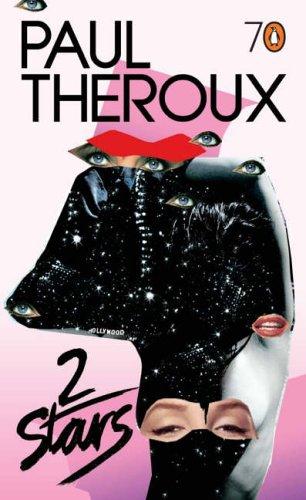
Paul Theroux: Two Stars
"When I was a boy--and even later--these two women [Liz Taylor and Marilyn Monroe] represented for me the throbbing epitome of feminine beauty and sexual attraction," Theroux writes. The Monroe piece was written after an auction of her items; except for a few telling details--"She had bought herself a few expensive dresses, confirming her true size, 35-22-35"--there's not much in the way of startling insight. The Liz profile, conversely, is fascinating: perhaps because he'd never written celebrity pieces before, Paul Theroux brought his travel writer's eye to bear on Taylor, with quirky results. It detours into an exploration of the truly weird relationship between Michael Jackson and Taylor, Liz playing Wendy to the pederast pop star's Peter Pan.

Elizabeth David: Of Pageants and Picnics
Since this collection is restricted to David's own writing, it doesn't contain this description by her editor, Jill Norman: "She liked to discuss her work as it developed, and so eating in her kitchen, at what she called her 'picnic lunches', was always a delight. She usually provided small dishes of whatever she was working on - Spanish tortilla or pâté perhaps, and always homemade bread and a glass of wine. The piles of books and papers on the table were pushed aside to make room to eat." It was that last detail--the piles of books pushed aside to make room to eat--that sent me in search of all of David's writings; I knew that here was a food writer after my own heart, stomach, and mind. The selection of pieces here is pleasant but not indicative of the range of David's writings. On the other hand, if you need to know how to cook wild mushrooms, or rabbit, or conversely, why figs and cream cheese make an excellent, easy dessert--this one's for you.


Er...not quite

The Babu's asli avatar has been up to no good. According to this TOI story on fiction versus non-fiction:

"Agrees literary critic Nilanjana Roy: "Much of fiction tends to be self- reflexive and absorbed with its own sense of self-importance. People are turning to non-fiction for answers."

Ummm. I'm a columnist and reviewer, not a critic, but thanks anyway. And I actually disagreed that fiction had lost its relevance; the journo who interviewed me over the phone and I had a very pleasant chat about Naipaul's views, and about contemporary fiction. About which I said, some of what's coming out these days, especially from a bunch of talented but self-conscious young American writers, can disappear up its own fundament. But I pointed to this year's Booker longlist, one of the strongest ever, and several of the more talented authors writing in (okay, Willy D, near India/ outside India/ about India, whatever!) India, and said that nope, fiction wasn't anywhere near dead, not even in the ICU. Then I said "People are turning to non-fiction for some answers, and non-fiction is becoming far more exciting--some of the best work that's come out recently carries the same charge and narrative force as fiction, but the two don't have to compete."
But in defence of the journalist, who spent about half an hour on the phone and asked interesting questions, a few things. She clearly interviewed about five or six people, and then had to scrunch the quotes into a very limited space. The story she was assigned to do was a nothing story: is non-fiction killing fiction, is the novel dead, is the novel dead again--it's a fake trend story. Then, and this is what had me feeling sympathetic, she called the next evening with a tight deadline: she was supposed to do a Dial-a-Quote Booker longlist story and deliver it the same day. Both times, she came across as enthusiastic about her job, and she appeared to have read as much in the way as background as she could: but to put any journo on this kind of assembly line production of stories is pointless. It's the Big Mac approach to "books stories"--get them out and burger literary quality.

That Lang silence

Anirban Das Mahapatra on how Ruskin Bond and Rory Medcalf are trying to revive the memory of a forgotten author:

"Amid the antiquity [in Mussoorie], however, the plaque in memory of the “barrister, writer, journalist, wanderer, editor of The Moffussilite, the first Australian-born novelist... a brilliant and restless soul”, stands out in stark contrast. The dates (born 19 December, 1816; died 24 August, 1864) place the inscription in temporal context to its surroundings, but the physical brilliance is somewhat incongruous. Unveiled by the Australian high commission on August 15 this year, it is a belated tribute to a man who was long forgotten, only to be remembered again. If only metallic sheen could make up for lost time....
“He verged on the melodramatic, was satirical at times and loved to exaggerate and sensationalise things,” says Bond of Lang’s style. “He wrote fiction that was quite racy compared to contemporary literature. But his travelogues, on the other hand, brought to prominence the little details of life in north India.”

Ashes to ashes; do you suppose, Hunter got up everyone's nose?

The literary cannon fired its last blast
And as HST's ashes went past
I hope the guests at his wake didn't sneeze
A bit of Gonzo out into the breeze.

Sunday, August 21, 2005

Because it's there

Stephen Phelan, you're a better man than Gunga Din. Or Hurree Babu.

"With hindsight, I realise that I was naive when I set out to read all the novels on this year’s Man Booker Prize longlist in the space of a single week. I accepted the assignment for reasons of intellectual vanity. Not even the great writer and critic Gore Vidal had ever pulled off such a wheeze, although he did once famously go through the top 10 American bestsellers and write a characteristically imperious essay about the experience.
Now, it would be my turn to become a book group of one, a judging panel unto myself. I would read 17 novels in seven days . Starting the week as diligent as a librarian’s apprentice, I would end it half-blind, sad-faced and walking into walls, like a pit pony down a Chinese coal-mine."

Punk rocks Willy D

Pankaj Mishra writes a pretty stiff Letter to the Editor in the wake of William Dalrymple's 'The lost sub-continent':

Not surprisingly, Dalrymple has nothing to say about the best young Indian novelists in English, who mostly live in India - Amit Chaudhuri, Vikram Chandra, Siddhartha Deb, Raj Kamal Jha, Rana Dasgupta, Rupa Bajwa and Tabish Khair. Recent books by Arundhati Roy, Vikram Seth, Amitava Kumar, Urvashi Butalia, and Abraham Eraly disprove his assertion that the state of Indian non-fiction is "dire". And he is startlingly ungenerous to writers such as the distinguished historian Romila Thapar. Sunil Khilnani, estimable author of The Idea of India, stands accused of having "decamped to Washington" - although he has long been resident in the west. Dalrymple also tries to dismiss Ramachandra Guha, a respected biographer and author of the forthcoming Picador History of Modern India, as a "cricket historian".


And Vandana Singh very kindly gave me permission to quote from an email in which she put down some of her reactions to Dalrymple's views:

"OK, first I think the classification of resident Indian versus Indian from Diaspora is too simplistic. I’m a case in point. As a commentator on the blog points out, so is William D., who fits in more with the Chinese and other travel writers who’ve come to India for a bit. In other words as long as you’re being taxonomic about it, you ought to come up with more accurate categories.
Second, somebody makes the comment that of course Indian writers from the diaspora will be more successful and/or better writers --- because of their location, the fact that they are natural bridges between cultures, and so on. And since Indian publishers can’t afford big advances and the market in India is still small, naturally they will tend to write for an international audience, which will inevitably result in compromises. This of course excludes the Arundhati phenomenon, and completely excludes writers in the non-English Indian languages, some of whom are bloody brilliant. (Consider Premchand himself, one of the world’s finest short story writers --- nobody outside India has heard of him).
Here’s my take: yes, there is some truth in the above. And I’m probably nuts to be swimming against the current here and getting books published in India first, but I have my reasons. The comment about compromises is really true. But there are ways around all that.
I think Indian literature in English and in the vernacular can only reach greatness consistently if the two interact and feed off one another. Similarly writers living outside India who identify as Indian (never mind the rest) can best function when there is a healthy interaction between them and their compatriots at home. And the comment about the lack of money in the Indian publishing scheme is true, but there are ways around that too. Indians are far too talented at finding ways and loopholes and whatnot. Let me explain what I mean.
Way back in (I think) the 1960’s, four or five American SF writers who had talent but no money formed a group called the Futurians. I’m embarrassed to say I don’t recall the people in the group --- I think Asimov may have been one of them, and possibly Damon Knight as well. From these few penniless writers an entire movement arose. Damon Knight later went on to start the famous Clarion SF workshops, in which aspiring writers (chosen on the basis of their submitted work) went on a 6-week retreat with 6 established writers, learning, critiquing, and writing. Those who survived became, for the most part, successful writers. Clarion continues to do its bit today, and recently it has also been started in the UK. Then there is also this phenomenon in American SF of fandom --- volunteers organize ‘cons’ where professional writers and editors mingle with readers, fans, etc., there are panel discussions and parties.
So what I’m saying is, in order to encourage more reading and writing in India, we don’t necessarily need a lot of money. We need people with vision, to facilitate meetings where writers can interact with each other, bounce ideas off each other, form movements if they choose, build bridges between the vernacular and the English traditions. I don’t only mean formal meetings, but also small groups meeting at each others’ houses over chai and samosas to write, critique, argue, and hone their talents. (Jaya’s idea about a conversation between Indian childrens’ writers fits in perfectly here). Also another Zubaan idea, if I recall correctly, was to take writers and reading sessions to bookstores and coffee places. I suspect that if there are enough of these events, they will provide enough nuclei for a mass-crystallization. There are also (I suspect) people with money and a love of literature who are willing to host mehfils of poetry, music and writing. Yes, it is a dead Delhi tradition, but why not revive it?
I believe that there is more than enough talent in India and among Indian writers in other locations. (Consider, just by the way, the brilliant Premendra Mitra, whose translations from Bengali have recently become available). I think the good stuff needs to be brought out in the open, discussed, critiqued, praised. I think that part of my responsibility as a writer living abroad is to do my small bit in shouting all this from the rooftops. (This is one of the reasons why I’ve started a page on Indian SF off my website --- and eventually I’ll include non-English Indian SF as well). But one person can’t do much.
I’d welcome comments and critiques. Maybe all this would be worth writing up on my website, once I’ve got your feedback and my thoughts in order."

Saturday, August 20, 2005

Seven little Penguins

From Vikram Seth's A Suitable Boy:

'...Shakespeare is not merely great but grand, as it were.'
'But only as it were,' said Amit. 'He only looks big in bulk. And I have my own way of reducing that bulk,' he confided. 'You may have noticed that in a typical Collected Shakespeare all the plays start on the right-hand side. Sometimes, the editors bung a picture in on the left to force them to do so. Well, what I do is to take my pen-knife and slit the whole book up into forty or so fascicles. That way I can roll up Hamlet or Timon--and slip them into my pocket. And when I'm wandering around--in a cemetery, say--I can take them out and read them. It's easy on the mind and on the wrists. I recommend it to everyone. I read Cymbeline in just that way on the train here; and I never would have otherwise.'
Kabir smiled, Lata burst out laughing, Pran was appalled, Mr Makhijani gaped and Mr Nowrojee looked as if he were about to faint dead away.
Amit appeared pleased with the effect.


I was more than a bit sceptical about Penguin's Pocket series, 70 short titles by old stalwarts and new authors, released to celebrate its 70th birthday. There was this:
Now, unexpectedly, the titles have provoked outrage and surprise because they include work by only two authors who are not white.

And there was my personal dislike of abridged versions of anything; pocket books are a bit like infotainment, things designed for the appallingly lazy reader who'd be better off frying his brains with whatever's on the tube.
But then there was Allen Lane, the man credited with starting the paperback revolution:
"For all his charm, his quick decisions could be abruptly expressed. Visiting the Australian office in 1961, he furthered his place in publishing legend when he decided to sort out management problems with a last-minute command at the airport. Turning to senior executives, he said: "You're out, you're in, you're out and I'm off."

And then the Penguin Pocket 70s arrived. One of the perks of working as a books columnist and occasional reviewer is that you get to see the full series; if I'd been browsing in a bookstore, I'd have bought maybe 20 of the set, but not the full thing.
What you do with 70 paperbacks is, you spread them out all over the carpet, fight with your partner over who's going to read what first, and then spend the next few days changing your mind about the value of these pocket books. Reluctantly. With some highbrow carping about the inclusion of writers like India Knight or Jamie Oliver, when there's no James Baldwin in sight. But the fun of it is in meeting old friends--hello, Camus, it's been a long time, hey there, O'Hanlon, whassup?--and reading, I'm ashamed to admit, at least a few authors I hadn't come across before--Tony Harrison, Steven Runciman.

The thing is, Vikram Seth was right. At this size, it's absurdly easy to slip ten of these at random into your handbag; even if you've met most of the authors on the list, they jog your memory. It's been years since I re-read Primo Levi's Elements; the Nabokov selection sent me back to Pale Fire and Speak, Memory; and Helen Dunmore, how could I have forgotten her. As the Jabberwock says in this post: "I tell you, the size makes a big psychological difference; maybe I should chop up all the fat books I have to tackle and then put them back together afterwards?"

Here's the first seven on the list:

This was the landmark literary obscenity trial Penguin Books fought thirty years after D H Lawrence's death. From the closing speech for the defence: "Lawrence lived and died suffering from a public opinion, caused by the banning of this book, that he had written a piece of pornography called Lady Chatterley's Lover, and if this case has done nothing else it has for the first time enabled this book to be dragged out into the light of day so that we can see what it really is... All the time, this book was the passionately sincere book of a moralist in the puritan tradition, who believed he had a message for us and the society in which we live, whether we agree with this message or not."


Eric Schlosser: Cogs in the Great Machine
Excerpted from Fast Food Nation, this is a gritty section that covers the suicide of a Colorado rancher, the terrible risks that slaughterhouse workers take, and the dark poetry in the names of their jobs: Knocker, Sticker, Shackler, Rumper, First Legger, Knuckle Dropper, Navel Boner, Splitter Top/ Bottom Butt, Feed Kill Chain. I thought Schlosser did a great job when I read the book in 2002, but these descriptions made me pull out the book for a second reading: "I see: a man reach inside cattle and pull out the kidneys with his bare hands, then drop the kidneys down a metal chute, over and over again, as each animal whizzes by him; a stainless steel rack of tongues; Whizzards peeling meat off decapitated heads, picking them almost as clean as the white skulls painted by Georgia O'Keeffe. We wade through blood that's ankle deep and that pours down drains into huge vats below us."


P D James: Innocent House
This was one of the few Pockets that didn't work for me, possibly because I remember Original Sin, the book from which this section was extracted, too clearly; it's the hassle that accompanies knowing what happens next and why. Someone at Penguin probably had a lot of fun selecting the excerpt: Original Sin starts with the murder of a senior editor at a publishing house.


Nick Hornby: Otherwise Pandemonium
Two short stories from the man who singlehandedly invented Lad Lit; Otherwise Pandemonium has a post-Tivo conceit (what if you could fastforward through television, including stuff that hasn't happened yet?) told by a cloyingly Average Guy narrator. Not A Star starts with a mother discovering that her son has starred, maybe, in a porn film. Strictly subway reading. Which is fine by me; so long as I stay away from the Delhi metro, I don't have to read the thing.


Albert Camus: Summer in Algiers
I had forgotten Camus' essays; I no longer even have them on my shelves, someone borrowed them and never gave them back. But it's better to read them now; as an adolescent, none of his themes--exile, longing, the instability of homelands, the impossibility of recapturing the past--made sense to me; they still don't, but at least I can fake it better now.
"There are no more deserts. There are no more islands. Yet there is a need for them. In order to understand the world, one has to turn away from it on occasion; in order to serve men better, one has to hold them at a distance for a time. But where else can one find the solitude necessary to vigour, the deep breath in which the mind collects itself and courage gauges its strength? There remain big cities."


Richard Dawkins: The View From Mount Improbable
Consider the fig, urges Dawkins, and takes us from there to an examination of natural selection. But this is a tantalising snippet; you have to read Climbing Mount Improbable and the later works in order to do one of the world's most interesting thinkers justice.


India Knight: On Shopping
On the other hand, there are times when an excerpt is just enough.The Babu is a deeply reluctant shopper. He commits grievous style errors, and like the chap in Dorothy Parker's poem, he doesn't care, he didn't care again today, and he wishes everyone else was made his way. The intimate tone of Knight's guide to looking better, buying and applying the right makeup, how to choose clothes and bonding between mother and children is kind of lost on someone whose style hero is Pigpen, doesn't own makeup, has seven-year-old T-shirts and doesn't have rugrats, but it made me feel suitably girly and Cosmo-ed for about ten minutes.

Wednesday, August 17, 2005

The New Laws of Fight Club

Siddhartha Deb argues for a new kind of Indian novel:

The break that more recent books make with this idea of the Great Indian Novel, one that mimetically captures the sweep of India, illustrates the paradox that focusing on the partial may evoke the whole with greater clarity. This is not to say that a different kind of big Indian novel will not emerge, something that will avoid the superficialities of the earlier, Rushdiean model. In India, as elsewhere, things inevitably change. It is possible that modernity will flatten its different territories into an even landscape, just as it is possible that new ideas will reconfigure what it means to be Indian or South Asian in the age of diasporas. In that case, we may well need a new kind of Indian novel, a novel that will be expansive but not shapeless.


He's on very rocky ground with this paragraph, though:
But writers such as Seth, Amitav Ghosh, Mukul Kesavan and Shashi Tharoor came from a national elite that had reshaped colonial institutions to its own ends, including a Delhi college that led to this generation of writers being called the "St Stephens School of writing". Such precise identification is a bit far-fetched, but they possess remarkably similar profiles. Members of the metropolitan upper class, they are all men, and a shared sensibility is evident in their novels: pragmatic in tone; epic in scale; flat in terms of characterisation; and displaying a liberal nationalist temper that is too confident to question its relevance to the times. Their books demonstrate something of the civil servant's vision of India as a territory firmly controlled from the centre, open to the all-surveying gaze of the writer. It is not surprising, therefore, to look at the bloated books of this period and realise that the best of them, Upamanyu Chatterjee's English, August: an Indian Story, succeeds by inverting this principle and satirising the trainee bureaucrat from Delhi who lands up in the provinces and discovers an India he doesn't know at all.


The Babu doesn't think you can lump Ghosh, Seth, Tharoor and Kesavan together quite so glibly; but then he's beginning to recognise the Brave New Rules of Indian writing.

1) Killing the Salman: If you meet the Rushdie on the road, kill him.
2) The sufferings of the Barsati Elite, even when undertaken in Genuine Barsati with Genuine Suffering will always be Less Genuine than the sufferings of the Small Town Boy.
3) Logical corollary to law number 1: Rushdie is good; Naipaul is God.
4) The IWE (Indian Writers in English) versus the Writers Who Write In Other Languages is getting old, and besides, we got them all together at the Neemrana fort and no one threw anyone else off the battlements. This makes for bad television, so we will start a new fire: Arrack versus Scotch, the desi IWE versus the Indian Made Foreign Exported WE.
5) There's more, but we need to go off to find a suitable set of battlements for Law Number 4 to prove itself.

Copyright, copywrong

Joseph Stiglitz critiques the use of excessive force in intellectual property rights cases: (Link via BoingBoing.)

Without intellectual property protection, incentives to engage in certain types of creative endeavors would be weakened. But there are high costs associated with intellectual property. Ideas are the most important input into research, and if intellectual property slows down the ability to use others’ ideas, then scientific and technological progress will suffer.


And The LA Times examines the issues that have forced Google to stall its plans to build the world's largest online digital library:
Google should show more respect for publishers' rights — and publishers should not make the mistake of using the strictures of copyright law to tie their own hands. Building a guide to the contents of books is hardly the same as making bootlegged copies or plagiarizing. It's a monumental and costly task, and publishers have given no reason to believe they can do it for themselves. Unless their works are as well integrated with the Net as other forms of information and entertainment, they may be left waiting on the shelves for an audience that no longer bothers to walk through the stacks.

Three bodhisatvas to you, too

Hua Hsu writes about literary hoaxes in general and raises the fascinating case of the Yasusada poems:

A case in point was the poetry of Araki Yasusada, a Hiroshima survivor whose striking voice and fine, sensual imagery caught the attention of editors at Grand Street and The American Poetry Review in the early 1990s. ...Sketches and workbooks seemed to confirm Yasusada's identity as an A-bomb survivor who had worked as a postal worker in Hiroshima until his death in 1972. But on closer inspection, his life was rife with impossible claims...
After the inconsistencies in Yasusada's patchy, impossible story were exposed on Internet message boards by academics and poets in 1996, some of the same people who had praised the unnerving beauty of his poems now lined up to strike them down as dangerous and possibly racist. American Poetry Review editor Arthur Vogelsang, who had published a number of Yasusada's poems, denounced the hoax as ''essentially a criminal act."
Today, the true author of the verse gathered together in the 1997 volume ''Doubled Flowering" is commonly believed to be a Midwestern poet named Kent Johnson. But Johnson--who is currently preparing a new book of Yasusada's letters and prose titled ''Also, With My Throat, I Shall Swallow Ten Thousand Swords" (Combo Books)--claims the hoax was in fact the doing of his friend, the late (and possibly fictional) Japanese-American poet Tosa Motokiyu. Some observers speculated that the promoter of this unknown Japanese poet was in fact expressing some kind of long-suppressed, white male rage. If Johnson couldn't find acclaim with his own words, why not borrow the voice of another, more fashionable kind of victim?


Some of the strangest documents in the case can be found at Jacket magazine, published by Kent Johnson. Don't miss the "Yasusada letters":
"I am just reappeared from work and covered with so many lily pollens. Achoo! May three boddhisatvas go into an orifice of you. Thank you."

Sic Granny Weatherwax onto the media

Terry Pratchett would like journalists to start reading the fine print instead of turning a letter he wrote to The Times into an "attack" on J K Rowling:

As soon as the Harry Potter boom began, journalists who hadn't read a children's book in years went "Wow, a wizards'school! Wow, broomstick lessons! " and so on, and generally acted as though the common property of the genre was the entire invention of JKR. This continues, sometimes quite ridiculously. And now we have Groomsman's 'knights and ladies Morris dancing to Greensleeves' With such an easy wave we can dismiss, oh, Ursula leGuin, Diana Wynn Jones, Jane Yolen, Peter Dickinson Alan Garner...fill in the list.
Pointing this out is, apparently, an attack on JKR. I don't have any problem at all with her rise, only with such third-party silliness such as the above, which insults good authors who wrote great books at a time, not long ago, when advances were always low and hype was unknown.


His letter started with a good question--"Why is it that the continued elevation of J K Rowling can only be achieved at the expense of other writers?"--a complaint clearly directed at journalists rather than Ms Rowling.
But I loved this bit, too:
Rowling says that she didn't realise that the first Potter book was fantasy until after it was published. I'm not the world's greatest expert, but I would have thought that the wizards, witches, trolls, unicorns, hidden worlds, jumping chocolate frogs, owl mail, magic food, ghosts, broomsticks and spells would have given her a clue?

Sunday, August 14, 2005

Vice Visa

William Dalrymple expands on a talk he gave at the India Today conclave earlier this year, to make the somewhat controversial case that we have to look to the diaspora for future IWE (Indian Writing in English) stars:

More than a decade later, however, it has to be said that there is a slight sense of disappointment in Delhi. According to David Davidar, the founding editor of Penguin India, who did much to kick-start the Indian publishing boom, after the excitement of the 1990s, the situation has, as he diplomatically puts it, "stabilised". ..The truth is, however, that since 1997 there has been no new galaxy of stars emerging to match the stature of those of the 1980s and 90s. Many of the Indian novelists who were signed up with such excitement 10 years ago failed to repay even a fraction of their advances. The only Indian-themed book to win the Booker - The Life of Pi - was written by Yann Martel, a white Canadian. In India itself, there is no new internationally acclaimed masterpiece, no new Roy."


I know this is going to spark off furious debate, with everyone jumping into the desi versus diaspora argument. But to my mind, Dalrymple answers at least part of his own question further down:

"There is also the important question of how far Indian writers in English have to compromise if they are writing primarily for a firangi audience. After all, the market in India itself, while growing fast, is still tiny: most books sell less than 1,000 copies and even 5,000 copies can make you a bestseller; therefore to make a living as an Indian writer in English you have to crack the British and American markets and that can mean serious compromises."


I would suggest it's a little more than a question of compromises; it ties in with another argument that Dalrymple makes about the relative lack of a literary life in places like Delhi versus places like New York or London. If you don't have a market, or an audience, at "home", then of course it makes more sense in a globalised era to take yourself and your skills elsewhere. That's probably the same reason why, to attempt to answer another of Dalrymple's questions, you haven't had good non-fiction or great biography coming out of India: no publisher here could afford to pay a writer the kind of advance that would take him or her through five, ten years of research. India's still a tiny market in terms of English-language publishing. I don't think it works to sit back and be complacent about it, and expect the market to grow all on its own; I do think publishers here need to start demanding better quality in terms of fiction; but I think it'll change.

I don't want to start thinking in terms of us stuck at Home versus them Abroad; there are too many Indian writers I know who seem emblematic of this generation in the sense that they're perfectly happy occupying several worlds at the same time. This generation travels; it puts down roots in several cities; it explores not just one identity but a whole set of identities. With awards like the Crossword, one of the key problems the prize had to address was the question of how you define an Indian writer--the old markers, such as the passport, the place of birth, the country of origin, just didn't work any more. On the other hand, none of us have any problem defining an "Indian" book, whether it's written here or elsewhere, in English or in any one of India's many languages.

William Dalrymple is a case in point himself, in terms of identity. He's not Indian by birth or in terms of his passport, but I would have great trouble seeing him as a "firang" writer. In terms of lineage, he seems to fit in best with the tradition of itinerant travellers who've visited India down the ages, from Chinese monks to Arabian scholars, and made it, in small or large ways, a temporary or permanent home. This country has always had room for visitors, some of whom have become residents; now it's our scholars and writers who're doing versions of what Alberuni or Ibn Battuta did elsewhere, for pretty much the same reasons--the trade routes are better, the marketplaces are bigger, the discussions are more exciting, and hey, the world's a large place, it makes sense to see as much of it as we can. Perhaps we need to move on from the Passport School of Criticism and just, well, hand out visas to come visit, or to go elsewhere, to anyone with talent, curiosity and an imagination.

The dope: for Booker junkies

You know what's great about the selfless promotion of the joy of literature and the love of the reading habit we call the Booker Prize?
The gossip.
First off the mark, Boyd Tonkin, who served as a Booker judge in 1999, the year fellow judge John Sutherland memorably shot off his mouth (link thanks to Zafar, Richa):

From The Independent:

"The professor's distorted leaks attributed to us views we never held. He unpleasantly hinted that some judges felt uneasy about the " anti-Zionist sentiments" of Ahdaf Soueif's short-listed novel The Map of Love, a claim that prompted poisonous racist innuendos against Mr Kaufman in the Arabic media. He falsely wrote that no one really liked that year's outstanding winner, J M Coetzee's Disgrace. And he sneered at the exhausting, life-consuming process by saying Coetzee had won merely "a lottery not a literary competition".


And:
"Yet if the Establishment cabal behind the Man Booker sought a literary rerun of Reservoir Dogs by promoting Professor Sutherland, the opposite has happened. This selection reads more like an invitation to an upmarket vicarage tea-party than to a showdown in a blood-stained warehouse. It has to be said that the overwhelming feature of the 2005 long-list is just how orthodox, inoffensive, and non-contentious it looks. This is a bien pensant list for, and from, bien pensant readers. It will ruffle few feathers and frighten few horses.


Then there's the Thoroughly Pointless Analysis:

From The Observer:
"From a glance at the volumes which have now made the 'semi-final', though, it is the talent of jacket designers which leaps out. Like 17 chocolates in a box, all the titles look enticing."

And the inside dope on Ian McEwan and John Banville, who're both on the longlist. Two months ago, Banville ripped apart McEwan's Saturday in the NYRB, in the fashion of a gently sorrowing but stern priest faced with an erring choirboy.

TEV posted the review on his blog, with comments:
"Saturday is a dismayingly bad book. The numerous set pieces—brain operations, squash game, the encounters with Baxter, etc.—are hinged together with the subtlety of a child's Erector Set. The characters too, for all the nuzzling and cuddling and punching and manhandling in which they are made to indulge, drift in their separate spheres, together but never touching, like the dim stars of a lost galaxy. The politics of the book is banal, of the sort that is to be heard at any middle-class Saturday-night dinner party, before the talk moves on to property prices and recipes for fish stew."


And a day after the longlist announcement was made, Rushdie called for an Islamic reformation, sparking fears that he might find himself under attack once again.

Countercurrents has the text here:

"What is needed is a move beyond tradition -- nothing less than a reform movement to bring the core concepts of Islam into the modern age, a Muslim Reformation to combat not only the jihadist ideologues but also the dusty, stifling seminaries of the traditionalists, throwing open the windows to let in much-needed fresh air.It would be good to see governments and community leaders inside the Muslim world as well as outside it throwing their weight behind this idea, because creating and sustaining such a reform movement wil lrequire above all a new educational impetus whose results may take a generation to be felt, a new scholarship to replace the literalist diktats and narrow dogmatisms that plague present-day Muslim thinking...
...If, however, the Koran were seen as a historical document, then it would be legitimate to reinterpret it to suit the new conditions of successive new ages. Laws made in the seventh century could finally give way to the needs of the 21st. The Islamic Reformation has to begin here, with an acceptance of the concept that all ideas, even sacred ones, must adapt to altered realities.


Also:
Interviews with longlist contenders:

The Observer on James Meek (The People's Act of Love)
The Independent on Harry Thompson (This Thing of Darkness)
The Observer on Julian Barnes (Arthur and George)
The New Straits Times on Tash Aw (The Harmony Silk Factory)


And Edinburgh is thrilled. The literary festival will see 11 out of the 17 writers on the longlist dropping by--nice planning there.

Thursday, August 11, 2005

"Everybody's taking something..."

"...or they'd never make it till morning." Theresa in Looking For Mr Goodbar.

Judith Rossner is dead; she was 70.

From the obit:

"In a 1983 interview with The Washington Post, Rossner said, "It's astonishing what some women will put up with just to have a warm body _ some of the brightest women I know are just obsessed with that search. It's very sad."
It was a subject she explored again and again.
"My abiding theme is separations," she said in the same interview. Her women yearn to connect with men or family to find love, but typically find it unattainable.
Most of her books, she said in the Post interview, "are about whether the heroine should leave, whether it's a husband, a mother, a home.""


From the NYT's 1975 review of Looking For Mr Goodbar:

It is a measure of "Mr. Goodbar's" richness and complexity that it can be read on many levels. Catholics might view it as a passion play; feminists might consider Theresa a political victim of rape. Men may focus on the book's sexuality. (Men have tended to overreact to the wider use of sex in recent writing by women, but I don't think there's all that much behind this new freedom: sex is simply another area of experience for the woman novelist to mine in the same sense that the freedom to write about being Jewish say, is for Jewish writers.) What adds to my view of "Mr. Goodbar" as an exploration of passivity is the angry and frustrated reaction of a number of women who have read the book. "Mr. Goodbar" may, for them, have driven the final stake through the heart of the axiom that passive is a good way to be if you're a woman.

Wednesday, August 10, 2005

August 6, 1945

"At exactly 8.15am, on August 6 1945, Japanese time, at the moment when the atomic bomb flashed above Hiroshima, Toshiko Sasaki, a clerk in the personnel department of the East Asia Tin Works, had just sat down at her place in the plant office and was turning her head to speak to the girl at the next desk.


This week 60 years ago, Fat Man and Little Boy took out Hiroshima and Nagasaki. John Hersey's classic article on the survivors of Hiroshima ran in August 1946 across the New Yorker; The Guardian reprints an abridged version in commemoration.

Man Booker Longlist

Amardeep takes issue with Amitava Kumar's recent critique of Rushdie:

"Though I generally admire Amitava Kumar, here I have to disagree with him, especially the central thesis of this essay -- the idea that what Rushdie has been writing about all along is himself. There is undoubtedly narcissism there (in the recent books), but there is also a real feel for the subject matter (in the earlier books). Not to mention brilliant wordplay, compelling storytelling, and verve. And Rushdie's narcissism, especially since it is checked by self-consciousness about the same, need not be a mortal sin. In the right hands, it can also be revelatory.
(Incidentally, isn't it a little bit odd that Kumar marks Rushdie's narcissism in a review that is largely structured as a personal essay?)"


Rushdie's ex-wife, meanwhile, was in the news. Marianne Wiggins reviewed John Irving for The Washington Post in what might be called a negative manner:
"Until I Find You , the new John Irving novel, goes for over 800 pages and leaves one with an even greater appreciation for the Viagra label's warning of penile erectile states that might last up to four or five hours. Make it stop!"
The Post apologised a month later after Irving complained, and reported on the apology:
"Wiggins wasn't the only reviewer to dislike Irving's book, but she was likely the only one once married to author Salman Rushdie, a longtime friend of Irving's. Noting that he had a personal relationship with Wiggins, Irving complained to the Post, which requires critics to sign agreements that "any contact, friendly or otherwise, with the author of this book" should be disclosed to the paper."

Shalimar the Clown made it to the Man Booker longlist,; it's in good company, what with McEwan, Ishiguro and a Coetzee I haven't read yet and will approach with some trepidation after Elizabeth Costello.

Tash Aw - The Harmony Silk Factory

John Banville - The Sea

Julian Barnes - Arthur & George

Sebastian Barry - A Long Long Way

JM Coetzee - Slow Man

Rachel Cusk - In the Fold

Kazuo Ishiguro - Never Let Me Go

Dan Jacobson - All For Love

Marina Lewycka - A Short History of Tractors in Ukrainian

Hilary Mantel - Beyond Black

Ian McEwan - Saturday

James Meek - The People's Act of Love

Salman Rushdie - Shalimar the Clown

Ali Smith - The Accidental

Zadie Smith - On Beauty

Harry Thompson - This Thing of Darkness

William Wall - This Is The Country

Monday, August 08, 2005

My neighbour already has a Golden Gate

Shashi Tharoor demonstrates, in this extract from Bookless in Baghdad, how successful branding really works:

Indian writers are lately beginning to receive almost as much attention as their Western counterparts. Even if literary product-licensing is still an unknown art in India, it is surely not too early to consider the possibilities of paying commercial homage to our literary venerables. A Mulk Raj Anand Coolie badge, for instance, might be just the thing to accessorise the latest Bina Ramani blouse. Or perhaps the Cottage Industries Emporium might honour Kamala Markandeya by actually selling nectar in a sieve? Equally up their street could be the Raja Rao Serpent and Rope set, in leather and coir, perhaps, or an Anita Desai crying peacock, tastefully done in brass.


And we could always sell a small idol guaranteed to answer the prayers of men challenged in the size department; just call him the God of small things.

Anywhere but home

Prasenjit Chowdhury takes a look at writers in exile (link courtesy Partha--thanks):

Taslima’s bind is hardly unprecedented. Gao Xingjian, the Nobel-winning Chinese writer said, “A writer relies on language and not to speak for a prolonged period is the same as suicide.” The writer seeking to avoid being silenced is left with no option but exile. This has always been so: from Qu Yuan to Dante, James Joyce, Thomas Mann, Alexander Solzhenitsyn, and to the many Chinese intellectuals who went into exile after the 1989 Tiananmen massacre. There are writers who have been accused of being traitors because they left their homelands, from Joseph Conrad to Gabriel García Marquez to Gunther Grass to Mario Vargas Llosa. Gao himself lived in exile in France for 14 years.

All UFOs, proceed to Glasgow, please

The Scotsman reports on Worldcon in Glasgow:

Within minutes the discussion is orbiting so far above my head there is nothing to do but duck and crawl towards the door. The other panel is already packed with aficionados arguing about why The X-Files's Scully trumps Star Trek's Spock, and so I am left in a vacant corridor to ponder the weekend's other panels. One that catches my eye is: "Asexuality is the New Gay: But is it also the default of Science Fiction?" A sell-out, I'll wager, based on the number of androgynous single males wandering around lonely as a cloud of dark matter. The panel says it will appeal to the following: "In the middle of the sex scene, do you find yourself wanting to get back to the technical description of the star drive?"
For those who like their panels a little friskier and feel guilty that they prefer their science fiction art draped with scantily clad honeys in moon boots there is "Fem-bots and fairies": "Although we no longer live with the nipple shortage of the 1950s, fantasy art remains unreconstructed. Why hasn't feminism affected SF and fantasy art?" Bound to be plenty of seats at this one, the obvious answer being that science fiction remains largely the preserve of the single male, many of whom are better equipped at dealing with alien species than the opposite sex. (These men mistakenly bought Men are from Mars, Women are from Venus and thought the plot a bit thin and the science fiction unconvincing.) More popular no doubt will be "Xena, Buffy, Hex: Is Lesbianism in Genre TV Progressive"?

God speaks...

And according to The New York Times, he draws out his syllables a lot. Rachel Donadio interviewed Sir Vidia:

'What I felt was, if you spend your life just writing fiction, you are going to falsify your material,'' he said. ''And the fictional form was going to force you to do things with the material, to dramatize it in a certain way. I thought nonfiction gave one a chance to explore the world, the other world, the world that one didn't know fully.'' Naipaul's voice is rich and deep and mellowed by tobacco, and when he pronounced the word ''world,'' he savored it, drawing it out to almost three syllables. ''I thought if I didn't have this resource of nonfiction I would have dried up perhaps. I'd have come to the end of my material, and would have done what a writer like Graham Greene did. You know, he took the Graham Greene figure to the Congo, took him to Argentina, took him to Haiti, for no rhyme or reason.''
Naipaul has said he wrote the novel ''Half a Life'' (2001) only to fulfill a publisher's contract, and that ''Magic Seeds'' (2004) would be his last novel. (Over the years, he has often hinted at retirement, only to publish another book soon after.) Yet the fact that Naipaul has continued to write novels does not undercut his acute awareness of the form's limitations; indeed, it amplifies it. His is the lament of a writer who, through a life devoted to his craft, has discovered that the tools at his disposal are no longer adequate. ''If you write a novel alone you sit and you weave a little narrative. And it's O.K., but it's of no account,'' Naipaul said. ''If you're a romantic writer, you write novels about men and women falling in love, etc., give a little narrative here and there. But again, it's of no account.''


Oh, so the novel's still dead, but we can expect a few more corpses from The Man.

Sunday, August 07, 2005

The Professor in conversation

Ashok Malik speaks to Professor Amartya Sen about official and unofficial histories, India's China syndrome, definitions of progress and argumentative Pakistanis. Great stuff; the Express also carried a report on the Nobel laureate's lecture in Delhi. And there's a little more over here.

The brief autobiography Sen wrote for the Nobel academy website is worth reading:

"By pointing to the extensive heterogeneity in India's cultural background and richly diverse history, Tagore argued that the "idea of India" itself militated against a culturally separatist view, "against the intense consciousness of the separateness of one's own people from others." Tagore and his school constantly resisted the narrowly communal identities of Hindus or Muslims or others, and he was, I suppose, fortunate that he died - in 1941 - just before the communal killings fomented by sectarian politics engulfed India through much of the 1940s. Some of my own disturbing memories as I was entering my teenage years in India in the mid-1940s relate to the massive identity shift that followed divisive politics. People's identities as Indians, as Asians, or as members of the human race, seemed to give way - quite suddenly - to sectarian identification with Hindu, Muslim, or Sikh communities. The broadly Indian of January was rapidly and unquestioningly transformed into the narrowly Hindu or finely Muslim of March. The carnage that followed had much to do with unreasoned herd behaviour by which people, as it were, "discovered" their new divisive and belligerent identities, and failed to take note of the diversity that makes Indian culture so powerfully mixed. The same people were suddenly different.


And:

" The work on gender inequality was initially confined to analyzing available statistics on the male-female differential in India (I had a joint paper with Jocelyn Kynch on "Indian Women: Well-being and Survival" in 1982), but gradually moved to international comparisons (Commodities and Capabilities, 1985) and also to some general theory ("Gender and Cooperative Conflict," 1990). The theory drew both on empirical analysis of published statistics across the world, but also of data I freshly collected in India in the spring of 1983, in collaboration with Sunil Sengupta, comparing boys and girls from birth to age 5. (We weighed and studied every child in two largish villages in West Bengal; I developed some expertise in weighing protesting children, and felt quite proud of my accomplishment when, one day, my research assistant phoned me with a request to take over from her the job of weighing a child "who bites every hand within the reach of her teeth." I developed some vanity in being able to meet the challenge at the "biting end" of social choice research.)

The Hindu Literary Review

...is up. This issue includes a feature on the thousand women from 153 countries who've been nominated jointly for the Nobel Peace Prize, interviews with Alexander McCall Smith and Gregory Roberts, and a slew of reviews.

Amitava on Rushdie

A provocative essay by Amitava Kumar for Tehelka analyses Salman Rushdie:

In the wake of the fatwa, writers all around the world sent letters to Rushdie and to the press, expressing their support for the man who had been forced to go into hiding. One of these letters was from Norman Mailer: "Many of us begin writing with the inner temerity that if we keep searching for the most dangerous of our voices, why then, sooner or later we will outrage something very fundamental in the world, and our lives will be in danger. That is what I thought when I started out, and so have many others, but you, however, are the only one of us who gave proof that this intimation is not ungrounded."
There can be no doubt that the threats that Rushdie faced and also the book-burnings and other protests were shameful and unacceptable. But I do not for a moment support Mailer's assessment. I don't believe that Rushdie has even found his most dangerous voice. In fact, I don't believe that Rushdie's is the most dangerous voice writing today. His is no doubt a powerful voice; often, it has been an oppositional voice; but it is a voice of a celebrity promoting commendable causes; more seriously, in some fundamental way, it is the voice of a metaphorical outsider, and therefore incapable of revealing to ourselves, in an intimate way, our complicities, our contradictions, and our own inescapable horror. I don't deny that it is a voice that can engage and delight and of course annoy, and yet it is very important to make a distinction: what Rushdie writes can easily provoke, but it is rarely able to disturb.


There's also a mild, relatively bland review of Naipaul's Magic Seeds on the same page. Interesting juxtaposition.

Friday, August 05, 2005

Fat Man Walking

Marlon Brando's autobiographical novel about a fat man who falls in love with a lady pirate is coming out, and something tells me I'll never watch Streetcar with quite the same degree of yearning lust again.

From The Telegraph:

Like the novel's hero, Brando was grotesquely fat, weighing more than 20st when he died in Los Angeles, and was fascinated by Asian women and the East.
After filming Mutiny on the Bounty in Tahiti in 1963, he bought a South Sea island, Tetiaroa. His second wife, Movita Casteneda, was Tahitian and his third, Tarita Teriipaia, was a Chinese-Polynesian dancer.
Even the sexually ambivalent nature of the hero, Annie Doultry, reflects Brando's predilections.

The Islam Quintet

The fourth volume in Tariq Ali's Islam Quintet is out; sounds like it's an interesting revision of history.

Chris Foran in The Walrus:

Among those publishing at maximum volume since 9/11 has been the historian and essayist Tariq Ali. Both his The Clash of Fundamentalisms: Crusades, Jihads and Modernity and Bush in Babylon: The Recolonization of Iraq give from the international Left at least as good as they get from the American Right.
But that same Tariq Ali has also nearly completed the sort of quiet writing project seemingly out of step with our loud age. A Sultan in Palermo is the fourth volume in the Islam Quintet, a series of historical novels that probe the lengthy encounter between Islam and Western Christendom. The series is revisionist in impulse, wishing to suggest that the dominant history of Europe in the last millennium, if not quite the lie told by the winner, as Napoleon Bonaparte once quipped, has certainly involved obscuring the truth about those who "lost" the continent. "If things go on like this," a character says at the start of the first novel, Shadows of the Pomegranate Tree, "nothing will be left of us except a fragrant memory."


Kamila Shamsie in The Guardian:
It is worth noting that Ali chooses to set his "Islam" novel of 1153 in a Sicily ruled by a Christian Hauteville rather than in an Andalusia ruled by a Muslim al-Muwahiddin (Almohad). It is not Muslim military and political power that interests him so much as the co-mingling of religious cultures (Christian, Jewish, Islamic and Olympian) and all that was lost when the religions pulled violently apart from one another. For this, it is not only the Christian leaders who are to blame. Al-Idrisi recalls, with sadness, the Muslim "rebels with long beards belonging to sects that preached the virtues of purity and abstinence ... [who] burnt the books of learning, outlawed philosophical discourse, punished scholars and poets, thus beginning the process that would allow the enemy to enter through the pores of our weaknesses and destroy everything".

Pickup lines...

...you must promise never, ever to use on me. In the styles of Rick Moody, Dave Eggers, Nathan Englander and more, as skewered by David Barringer. (Link via MaudNewton.)

Nathan Englander:
Pickup: I can't stand this. I had to walk up to you and talk to you. You can't understand how long it took me. My heart wheels like a wig in an Eastern ghost town. My father's on sabbatical, and I have his car. It's an Eldorado. I'm looking at you in earnest, really looking at you. Do you hear singing? Let's go. Parking is expensive in the city. Do you want to go? I'm torn. Can you tell I'm Jewish? Does it matter? I think I'm in love. Who else would I be in love with? I'm really looking at you. Do you want to go? I can't stand this.


And this is Dave Eggers' breakup line:
Breakup: I apologize for the delay in responding. It is my genuine intent to respond promptly and personally. I am sorry to say that you're just not right for my needs at this time. Please consider me in the future if you change in any substantial way.

Wave to The Masses, darling

Finally, a literary award put together by a PowerPoint presentation run amok. Welcome to The Quills, where Deepak Chopra, Anne Lamott and company finally, finally get to Thank The Academy.

From the website:

The Quill Awards are a consumer-driven celebration of the written word created to inspire reading while promoting literacy. The goals of The Quills are to:

* Celebrate Excellence in Writing and Publishing

* Recognize and praise the creators of important books and great literature

* Interest more consumers in acquiring books and reading

* Act as a bellwether for literacy initiatives


Consumed any good books lately? Want to develop a consumption habit? Feel strongly about the consuming experience? Cast your vote for The Quills here, Consumer.

Jailhouse rock

The winning entries from PEN's Prison Writing Contest 2005 are in:

Terrance D. Robinson: Mascara

No matter how institutionalized you are, there is a part of you that panics whenever you get a new cellmate. It’s enough to drive you mad! So much anxiety! Was the guy an asshole? Could you hear him sleeping in Burma? Does he hear voices that command him to wake in the middle of the night and parade naked round the cell? Getting a new cellmate is like a demented parody of The Price is Right: Charlie, tell him what he’s won!
To quote Forrest Gump: "You never know what you gon git."
“Any idea who it is?” I asked, silently pleading with the Fates to let it be Halle Berry or Sarah Michelle Gellar.


Jorge Antonio Renaud: Prison Moon

"I shake myself sane
and as the echoes hang
in the frigid air I explain
to the wild-eyed guard that convicts,
like all animals under the leash,
must bay at the beauty beyond them."

Christopher Best, Live!--from Texas Death Row:
"Each morning when I arrive at work, I hand my ID card to a guard at the building entrance. I swear, lately I have come to smell and taste the death-row building even before I step inside. As I walk in, I feel the dread on my flesh, even in me. Next comes the strip search, the ubiquitous humiliation of prison life, also magnified on death row because it’s conducted with much more detail, specificity and time. My co-workers and I remove every stitch of clothing. One guard carefully inspects each clothing item, turning socks, boxers, pants, and shirt inside-out, inspecting seams for hidden items, crinkling every square inch of fabric. Our shoes are bent, unlaced, pounded, and tossed, insoles left here and there on the floor.
Next, each of us spreads our legs, opens our butt cheeks, shows the bottoms of our feet, holds up our package of manhood, opens our mouth, and turns all about, arms held high. Next, each of us sits on a metal-detecting chair, which looks at our guts with some sort of high-tech imaging, to make sure we haven’t swallowed a weapon or contraband. Next, we place our faces on a metal-detecting plate on the wall, first one side then the other, as a double-check on the mouth. From this point and all day long, a series of cameras bear down on us in all the hallways, and guards stationed at a series of gates check all movement and action."

Tuesday, August 02, 2005

Bombay Blues

India Uncut and Indian Writing, among others, have done a great job of keeping us updated on flood stories and news, aside from the blogs we mentioned in the last post.

The Babu has little to contribute here, but heeding the grumbles of a Bombay pal who says he's sick of stiff upper lips and stoic stories, here's a list of Alternate Bombay Books We'd Love To Read. This one's for you, Naresh.


1. Midnight's Geriatrics
Courtesy his new dentures, Saleem Sinai bites back.

2. Love and Flogging in Bombay
An intimate peek into the closet world of suburban whip-wielders.

3. Maximum Shitty
A dark journey through the guts of Bombay's real underworld: the sewage system.

4. Shanta Rum
Raw tales of adulteration among the hooch kings of Dharavi

5. Vertigoa
Fleeing the commute, the office politics and a terrible family history for sand and sun.

Mumbai Helpblogs

From Zigzackly:

"I'm about to further the perception some people have of me as being a serial offender when it comes to group blogs.
The recent floods in Bombay, though nowhere near as large a tragedy as the earthquake and tsunami, showed how unprepared the city is for a disaster.
A friend, one of the contributors to the SEA-EAT blog, has started Mumbai Help, a blog that aims to put together information on helplines in Bombay, facilities in case of emergencies, and the like. In future times of need, the idea is it will swing into action the way the way the tsunamihelp team did, posting links to current news, requests for help and the other stuff we know so well.

How you can help
1. You could link to the blog from your own sites: http://mumbaihelp.blogspot.com/

2. You could become part of the team. You don't have to be from Bombay, or living in the city, though it would help if you knew a bit about it. In fact its essential that we do have some out-of-towners on board. When the electricity fails, and the net lines go down, those of us within the city may not be able to blog. Mail Sunil Nair - sunilrnair AT writers DOT net - or Peter Griffin - zigzackly AT gmail DOT com - and we'll send you an invitation.

3. You could mail in suggestions and information you have on emergency services. Same adddresses as above, or use the comments section on the blog.

4. And yes. If you live in a city or area that does not have a proper site and easily accessed emergency info, you could start your own regional blogs, and we'll link to each other. A chain of emergency service blogs.

Update:

Cloudburst Mumbai will aggregate news, links to news, and personal stories.
How to help: Same as above.

The Red Queen's Race

In the TLS, Margaret Drabble contemplates the ironies of "appropriation" from a very personal standpoint:

Drawing on a Korean narrative for The Red Queen was a foolhardly enterprise, and I was well aware of the dangers, dangers which were an integral part of my theme. Being aware, I proceeded, as I thought, in a correct manner, contacting the most recent and most scholarly New York-based translator, and, through her, the American publishers, and declaring my interest. My translator and I agreed detailed acknowledgement of sources and payment for use of copyright material as appropriate, and I proposed the inclusion of a foreword and afterword by her which could place my fictional efforts in a critical context. I envisaged, with what now seems like a childish naivety, the possibility of shared platforms and public discussions....
...For a year or two, I thought I had been welcomed over the boundary into a neutral zone, but I was to discover that I had entered the battlefield of accusations of Orientalism and cultural appropriation, of ignorance, cynicism and plagiarism.
The novel I actually wrote received no critical attention, either hostile or appreciative. I was accused of appropriation, and that was that. The multicultural censor looked no further. No questions were asked about my text, my intentions, my meaning. I did have a meaning, or I once thought that I did. I was so profoundly shocked that I hardly knew what I had done.
Appropriation, like racism, is an ugly word and an easy allegation, not easily addressed in the courts. The nature and ethics of cultural transmission are endlessly fascinating. When is a borrowing a theft, and when is it a benign sign of cross-cultural fertilization? Is there some common source from which all stories rise?

1857 and all that

Maya Jasanoff writes in the LRB:

By the 1890s the mutiny was comfortably a thing of the past, sanitised by time, victory and imperial consolidation. But the prospect of unsettling protest within India was not a thing of the past, particularly following the misbegotten partition of Bengal in 1905. On India’s frontiers, competition with Russia reached its most intense at exactly this time. Beyond India, the British Empire faced other serious challenges; and though Chakravarty correctly emphasises the centrality of war to Victorian Britain, the greatest of these wars, the Boer War, barely gets a look-in. Last but not least, there was the fact that the successful expansion of empire brought about increased reliance on the Indian Army, which was needed to hold down key possessions from Singapore to Egypt. Just how critical the sepoy army remained – and how cautious British commanders needed to be in deploying it – would be underscored during the First World War, when woefully ill-equipped sepoys came close to mutiny on the Western Front, and Indian forces in Mesopotamia, some of them Muslim, had to be persuaded to fight against fellow Muslims, in the wake of the Ottoman sultan and caliph’s declaration of jihad. Surely it is significant that British writers and readers revived stories of the mutiny at a time when the Indian Army was more vital than ever.
It is worth underscoring that these fantasies of penetration, assimilation and espionage corresponded to a period when Britons in India were far less tolerant of cross-cultural mixing than they had been before 1857. If anything worked to erode the cosmopolitan world of James Skinner (and his intermarried parents), it was the mutiny.