Life happened because I turned the pages~~Alberto Manguel

Monday, September 19, 2005

Oh, those Russians

The Mitrokhin Archive: Two is out and bits of the Third World are quivering like an underset jelly. (For the Allende story, go here.)
Comrade Malik has the lowdown on the former KGB man's India revelations:

One year after he died, the ghost of Vasili Mitrokhin, former senior archivist at the KGB, has returned to haunt the core of the UPA—the Congress and the Communists.
Just released in London, The Mitrokhin Archive II: The KGB and the World (Penguin/Allen Lane) claims fairly sensational disclosures about the former Soviet secret service’s operations in India.
The KGB, the book alleges, routinely bribed Left and Congress politicians, including ministers in Indira Gandhi’s government, bought secrets from them, paid them retainers. Making India, in the words of KGB general Olef Kalugnin, “a model of KGB infiltration of a Third World government...It seemed like the entire country was for sale”.


Comrade Bardhan thinks that British and US intelligence are behind the book. (Oh yeah. Good old MI5 and the CIA, funding ex-KGB guys so well that the US Embassy Mitrokhin first approached actually turned him away, assuming he was a crank.)
"We survive on people's money. I have never smelt roubles. I came to the party at the age of 15 and for the past 65 years been serving it," he said.
On the book, he said, "Mitrokhin who stole the archive" is not alive to verify the claims but it is clear that someone in England — Christopher Andrew, historian at Corpus Christi, Cambridge, and Mitrokhin's collaborator — wants to earn money through it.


The Congress denies everything, damn it, everything:
"To state that Mrs Gandhi became Prime Minister because of the manipulation by any foreign intelligence agency is preposterous. The truth is that Indira Gandhi became Prime Miniter in 1966, 1971 and 1980 because of the love, affection and trust the people of India reposed in her," the AICC said in a press release.


Andrew and Mitrokhin report suitcases full of KGB money going into the Prime Minister's residence, but don't seem to think she knew about the origins of the cash. However, they corroborate a Very Senior Source who says the suitcases were never returned. What the Babu would like to know is, what did Herself do with all them suitcases? And were they Louis Vuitton? Or just the GUM store brand?

Fresh Salman, grilled

Prufrock of Prufrock's Page rocks. Go read the whole thing:

"Well, if Shalimar won't leave you alone, there it is, I said.
What you get reviewed for if you don't want to be profiled?
HURRY UP PLEASE IT'S TIME FOR THE SHORTLIST
Well, that Sunday Boonyi Kaul was on the hill, she had a hot lunch,
And she asked me to write it down, to get the beauty of it hot--
HURRY UP PLEASE IT'S TIME FOR THE SHORTLIST
Goonight Julian. Goonight Zadie. Goonight Kazuo. Goonight.
Ta ta. Goonight. Goonight.
Good night, awards jury, good night, sweet jury, good night, good night.

If there was a Booker
And also the prize ceremony
And accolades
One by one
Drip drop drip drop drop drop drop
But there is no Booker."

Ctrl + pause?

Trevor Butterworth explores the ? of the ; opening up an argument that has no .

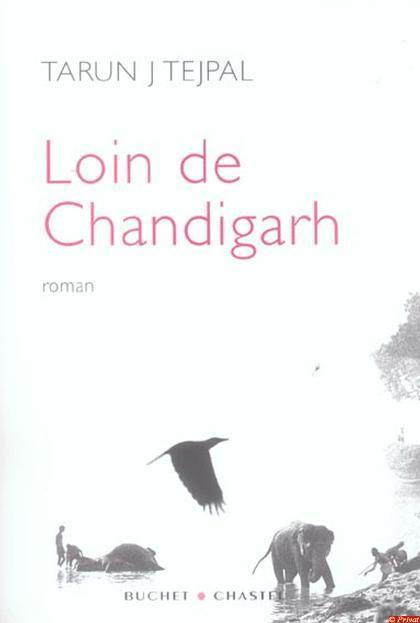
The Loin King

Until now, my favourite mistranslated title story was the apocryphal one about The Pillow Book, which was rendered into Bengali by the pirates of College Street as Bolsterer Bishoy. Then Twilight Zone had a nice story about aliens coming in apparent peace with a book titled To Serve Man; at the last moment, just as Earth's finest are stepping into the spaceship, a linguist comes running up with the translation--this is no declaration of altruism, but a cookbook. (On occasion, translation can be an improvement, as when Badhwar's Sniffing Papa (yeah, right, cocaine for the necrophiliac) was rendered into the much pleasanter La Chambre des Perfumes.)

Then a kind soul pointed the Babu in the direction of this translation of the fine, upstanding, spunky novel penned by our very own Punjab da Puttar:

Now that translation is a fine instance of the alchemy of desire at work. Stirs the Babu's heart. Not to mention his loins.

Sunday, September 18, 2005

Her name was Lola...

...and the original nymphet just turned 50.

From The Boston Globe:

'Lolita" was a disturbing book--both in its manner and its matter. Its matter is the relationship--sexual and other--of a European professor and his pubescent American stepdaughter, who he calls by the pet-name Lolita. The book's manner is more difficult to describe. Its form is a faux first-person memoir written, in the words of the dubious European in question, ''first in the psychopathic ward for observation, and then in this well-heated, albeit tombal, seclusion." Nabokov's narrator composes the text in 56 days, at a feverishly brilliant pace. He takes personal, narrative, and linguistic liberties (his native language is French) which are as surprising as they are amusing. He shows brilliance in virtually every respect. The name he elects to write under is Humbert Humbert.


Lolita may have been based on a real-life kidnap, speculates the Australian.

And the Babu's contemplating an ageing Humbert Humbert faced with a Lolita who's now 62 years old.
"Lolita, light of my life, fire of my loins."
(Lola, darling, pass the Viagra please.)
(Not now, Humby, my varicose veins need massaging, and besides, you know it's bad for you--last time you had those blue flashes and your heart started racing, sweets.)

"Lo-lee-ta: the tip of the tongue taking a trip of three steps down the palate to tap, at three, on the teeth. Lo. Lee. Ta."
(Humby, did you remember to put in your dentures? And you mustn't eat peanut butter, you know how it sticks to your gums, we'll have to call Nursie in and do a cleaning, won't we? Were you calling me? It sounded like "Loleeshaa" but then you started spraying spit everywhere, so I couldn't really tell.)
She was Lo, plain Lo, in the morning, standing four feet ten in one sock.
(Oh well. She grew. It's five feet four now, but about four feet around, yes, she always had a sweet tooth, my Lo. The one sock is mine, it's thick, knitted, in black wool with toe-jam and some chewing gum stuck to the underside. Rising from it is her massive, blue-veined calf with stiff black hairs sticking out like wires. Ah, Lo.)
She was Lola in slacks.
(The other day she turned around in the cereal aisle and slammed three trolleys and a stack of tinned pears all the way over into Garden Accessories. But my Lo's still independent; no corsets for her, she could've done the same thing with her belly as with her ample ass.)
She was Dolly at school. She was Dolores on the dotted line.
(She teaches these days at the local Comprehensive. The boys adore her, some of them have been trying to grow a beard like Miz Dolly's for ages.)
But in my arms she was always Lolita.
(Humby, you're so sweet, come on here and let me give you a big hug... Nursie? Nursie! I think I may have cracked his ribs, oh dear, he's stopped making those feeble noises, now he's turning blue...)

Let us now praise famous men

Ramachandra Guha comes not to bury, but to praise, honourable men. No, really. He raises a toast to Amartya Sen and Andre Beteille:
Neither Sen nor Béteille were ever ideologists. Neither identified with a particular political party. Yet, there was a profound moral centre to their work. Both were known for their academic contributions to the study of social inequality; both also known for their strong commitment to liberalism and constitutional democracy. These preferences and choices were not accidental. Rather, they were intimately linked to the circumstances of their upbringing. A sensitive, intelligent, young scholar living through the Bengal of the Forties would tend, in later life, to promote the values of cultural pluralism and social justice. It helped that there were greater men who had trodden that path — in particular, Rabindranath Tagore, Mohandas K. Gandhi and Jawaharlal Nehru. As much as purely scholarly influences, the example of this trinity lay behind the work of Sen and Béteille. They were never party men, but they were always patriots, upholding the idea of India forged by the likes of Tagore, Gandhi and Nehru.

Orbitchuaries

Jamal Mecklai remembers New Orleans:

I know--I guess, knew would be a better word today--New Orleans, the Cajun country stretching across South Louisiana and the Mississippi Gulf Coast extremely well, having been taken to New Orleans on my first fall break in college, a wide-eyed 21-year-old graduate student (relatively) fresh off the boat from India. It was, to use a contemporary phrase, awesome.
Not only did we drink all night and whatever part of the day we were up--I particularly remember sitting on the sidewalk swigging Boone's Farm Apple wine (99 cents a bottle, I kid you not)--but we danced on the streets, heard the finest music and I almost ended up married to a girl who was dancing naked on my table at a bar just off Bourbon Street one night.


And Dilip D' Souza visits a war memorial:

These memorials are not even at the Hall of Fame, just on the way up the hill. But the HoF has its share too, with plenty of inscriptions. Carved in stone at the entrance is this: "This temple of prowess (commemorates) the supreme sacrifice of those who laid down their lives in the defence of the motherland since 1947 in this sector." Wandering about, you find "They Liveth Evermore". And "Slain thou shall obtain Heaven, Victorious thou will enjoy the earth" from the Bhagavad Gita. And "How can man die better, than facing fearful odds for the ashes of his father and temples of his Gods" from Horatius. And "Thrice blessed is that warrior/Who is called to such a war by destiny/A war to be hailed as an open door to heaven" from the Bhagavad Gita again. And this: "I expect to pass through this world but once. Any good, therefore, that I can do or any kindness that I can show to any fellow creature, let me do it now. Let me not defer, or neglect it. For I shall not pass this way again."
Words, words, words, Eliza Doolittle might have said. I am grateful for them, because they tell us of the bravery and commitment of a whole parade of soldiers we didn't know about or don't remember anyway, none of whom shall pass this way again. Yet I am also saddened and almost angered by them. I'm so sick of words, as Eliza might have said. For this reason: what I wouldn't give to have those warriors here, instead of words to remember them by.

Die! Die faster!

Jay MacInerney on the greatly exaggerated reports of the death of the novel:

"If you write a novel alone you sit and you weave a little narrative," Naipaul told editor Rachel Donadio in the New York Times Book Review. "And it's okay, but it's of no account. If you're a romantic writer, you write novels about men and women falling in love, etc, give a little narrative here and there. But again, it's of no account." Hereby we dispose of Anna Karenina, Madame Bovary, Great Expectations and the majority of novels in the canon. What is of account, he claims, are non-fictional explorations of "the Islamic question", the clash of belief and unbelief, of east and west. Readers of Naipaul's last couple of novels - a fairly exclusive club, I should imagine - probably won't be surprised to learn that he's grown tired of the genre; even Tolstoy came to distrust fiction at the end, but personally I trust Tolstoy the novelist rather than Tolstoy the cranky, sclerotic polemicist. The only reason we listen to Naipaul is because he wrote A House for Mr Biswas and A Bend in the River. If the novel doesn't matter any more then his opinion wouldn't seem to count for more than my doorman's opinion.
In her essay, Donadio cites a recent American interview with McEwan in which he discusses the impact of September 11 as evidence of the waning influence of fiction. "'For a while I did find it wearisome to confront invented characters,' McEwan said. 'I wanted to be told about the world. I wanted to be informed. I felt that we had gone through great changes and now was the time to just go back to school, as it were, and start to learn.'" The phrase "for a while" seems crucial here.

Saturday, September 10, 2005

Henny and Shantih

Update:
Matthew J Reisz speaks to Seth and analyses Two Lives for The Independent:

What makes this all so powerful and painful is that neither Henny nor the reader can ever quite be sure about who had done exactly what during the Nazi era. Her former fiancé sent her an appalling letter that Seth savages for its "unfailing wrong-footedness", "larded with mock-punctilious, frigid qualifications and bristling with a dozen different kinds of psychological obtuseness". Yet some friends, keen to gain sympathy and perhaps financial help from Henny, seem to have embellished their own war record while subtly denigrating other people's. This section alone makes the book a superb exploration of what Seth describes as "morality under pressure".


Blake Morrison reviews it for The Guardian:
More than once, Seth worries that he has betrayed them, by making their private lives public; she especially might have disapproved. But his motives are generous, and the breadth of the canvas is ample justification. "Some there be," runs a passage in Ecclesiasticus, "which have no memorial; who are perished, as though they had never been." Henny and Shanti had no children. But they did have an author for a great-nephew. And his Two Lives is a stay against their oblivion.


And here's a few other links.

The Independent cruelly summarises Two Lives thus: "the dark past of the suburban dentist". Seth's uncle, Shantih, lost an arm in World War II but set up practice in London as a one-armed dentist all the same, after marrying Henny, whose family died in Hitler's concentration camps. The couple were surrogate parents to the adolescent Seth, who began to consider writing about their lives at his mother's suggestion.

Anthony Beevor, writing in The Times, is much more impressed by Two Lives:
In the hands of a lesser writer, the family story would have been little more than interesting. Seth, with his beautifully simple prose, creates a truly unforgettable double portrait. He zooms in on tiny details, then broadens his focus to include Nazi Germany, India and Israel, with all the great events of the 20th century. It is also a meditation on love, courage and friendship, on betrayal through opportunism and moral cowardice, on identity, exile and alienation, on the dehumanisation of racism, and on those acts of spontaneous generosity which are all that is left to maintain faith in humanity.


In The Sunday Times, Lucy Hughes-Hallet thinks Seth may have been too self-effacing in his attempt to let the voices of his relatives speak for themselves:
Seth describes this book as “history writ little” and as an attempt, in its insistence on the private worth of two publicly insignificant individuals, to defy “group hatred”. Written as an act of love and duty, it is a testament to his modesty and familial affection, but it will perplex his literary admirers.


On the other hand, Tom Adair, writing in The Scotsman, doesn't seem to have found Seth's restraint a problem:
This is a story of proven love. It makes little splash - no more than a murmur - a story too of prolonged endurance quietly borne. And yet it is full of moments that strike, and strokes that tell, weaving together, in the words of its main protagonists (taken from letters and conversations), stoical hope and quiet, poignant, lingering courage.

OUP is One Of Us?

Well, OUP's started a blog at any rate (link via Complete Review). It still has that newly minted, slightly uncertain look and is a trifle excerpt-heavy, but they have interesting original content:

Welcome to the OUP blog! Those of you looking for that "original content" we've promised can reference:
Nancy Sherman's post on America's treatment of our Iraq War veterans...
Harm de Blij's post on why geography education really does matter...
Jill Quadagno and Jerome Kassirer commenting on the problems in our health care system...
And Donald Ritchie's thoughts on the Karl Rove / Valerie Plame scandal...
Just to name a few and there is much more to come, so stay tuned.


The Babu wants an Indian version; OUP's publishing programme in India is pretty extensive, but doesn't get much media coverage because we believe gossip belongs on the books pages, not books. Also, to be honest, he's tired of your common or garden variety, death-of-the-novel, who's-an-Indian-writer-then literary spat. He wants a ringside seat as venerable dons get down and dirty over footnote 1.3 (vi) and whether it does or doesn't contradict the tertiary sources in Appendix 8a, Section 40 (xiiii). He wants the kind of deadly contest where Academic X narrows his eyes and snarls, "See Panjandrum's monograph on Monotheistic Tendencies in The Dickless Lemur, para 6, you cur!" and reels back in shock when Academic Y curls his lip and retorts, "Panjandrum? I think not. Consider Bigshot's Reykjavik presentation on The Semiotics of ChestBeating in Castrated Mountain Gorillas, paragraph 4--oh, and the footnote on Page 107!" All of this while breathless witnesses shake their heads: "He cited the footnote on Pg 107? That's--that's--harsh!"

Friday, September 09, 2005

The Ghost Who Balks


Suzette Chan asks whether the Phantom has evolved with the times:

"While the character has a reputation as being "the man who cannot die", the comic itself is similarly resilient. Published as a comic strip since 1936, the Phantom also appeared in movie serials, a feature film, and animated television series. There have also been many Phantom comic book series, published by different companies in the United States, Sweden, and Australia. The current U.S. incarnation, published by Moonstone Comics, is oriented to older readers and boasts both an ongoing comic series and a number of stand-alone graphic novels....
...Only the Phantom remains in the jungle, safe from outside society, an icon to natives who have no interest in changing the status quo, embodying an unquestioned ideal of colonial presence: constant, benign, and separate."


Kai Friese had the compleat Phantom history taped in this essay from Transition:
The jungle was stirring; the natives, as always, were restless. By the time the Illustrated Weekly began to print Phantom, the end of the Empire was at hand; the sun was setting in the East. And back at Phantom HQ, otherwise known as King Features Syndicate (a division of the Hearst Corporation), the editors made a number of changes to accommodate the sensibilities of their burgeoning Indian readership. Bengal had become first Bengali, and then Bangalla. To avoid any confusion with Hinduism's favorite hero, the Phantom's enemy Rama became Ramalu. The Pirate Singh Brotherhood, whose name was -- however inadvertently -- guaranteed to offend both the Rajput and Sikh communities, became the Singa Pirates. Until, finally, only one diminutive trace of our hero's original landfall remained: the Phantom's pygmy friends, the Bandar, whose tribal name Falk had lifted from the Jungle Book. They were still the Bandar log, the monkey people. After all, there are no pygmies in India.

Thursday, September 08, 2005

Red Herrings and Indian writing

Went looking for Indy Hazra's piece on Indian writing, and discovered just how apposite the title--Red Herring--was. If you follow the link from Google, you arrive at the slightly bizarre HT "vot article? ve know nuffink about no article" page, which carries a Zen-like set of musings on the impermanence of writing: "the stories on Homepage and Section Pages keep changing through out the day, what you find in morning may have moved out by evening."
We tracked it down, finally.

"I would be failing in my journalistic duties — truth-telling, that is — if I told you that I’m not always easy about the ‘Indian’ tag. Is there something called Indian Writing as a genre? If you go to any bookstore, it certainly would seem like that’s the case. A thriller written by an Indian (say Shashi Warrier or Ashok Banker or Sharadindu Bandhopadhyay) won’t be sitting pretty on the thriller section which is full of the Dan Browns and Patricia Highsmiths. Instead, it’ll be there on the shelf marked ‘Indian fiction’. The same goes for humorous, supernatural and historical fiction."

And:
"A writer who’s Indian, by virtue of his geographical location, is obviously steeped in a tradition that may or may not seep through his writings. This tradition, by the way, is urban and modern; local, national and global. But to parade ‘Indianness’ in a work of fiction simply to represent the nation is like making the props on the stage become more prominent than the play itself."

Utopia? No such place

Writes Jeremy Adam Smith (link via Bookslut):
"If utopia is supposed to be the ideal and perfect place, where everyone lives in harmony, then why do so many of them turn out to suck?"
His list of the Top Ten Worst Utopias Ever starts with Plato's Republic, and ends with where we're at, cyberspace as just the next dream of perfection gone terribly wrong.

Yes, John, now go tell Michiko

After the Booker shortlist was announced, John Sutherland, chair of the judges, came out with this gem:
"If I had my way, I would give Salman Rushdie the Nobel Prize. But I am not king of the world here."

He hasn't read Ms Kakutani's review of Shalimar, has he now?
"Worse, "Shalimar the Clown" is hobbled by Mr. Rushdie's determination to graft huge political and cultural issues onto a flimsy soap opera plot - a narrative strategy that not only overwhelms his characters' stories but also trivializes the larger issues the author is trying to address."

(Oh and for the benefit of the reader of this blog who keeps writing in to ask who Michiko Kakutani is? McSweeney's had an answer.)

Praise de lawd and pass de controversy

The Booker shortlist is out, and so are McEwan, Coetzee and Rushdie. Nice call on the last two, given the kind of talent on the longlist this year--but they dumped Saturday? Tch. Julian Barnes is widely seen as the frontrunner this year, but I'd say it's going to be a lot more even; the only book I haven't read yet on the list is John Banville's The Sea, but the rest are all high-calibre performances. The Guardian stuck its neck out and predicted a completely different list: here's what they said would make it, and here's the mea culpa.

The 2005 shortlist:


John Banville, The Sea

Julian Barnes, Arthur & George

Sebastian Barry, A Long Long Way

Kazuo Ishiguro, Never Let Me Go

Ali Smith, The Accidental

Zadie Smith, On Beauty.

Sunday, September 04, 2005

Obligatory Rushdie celebwatch

Salman Rushdie is:
a) in form, sort of back, maybe, maximum ophul...
b) overanalysed, says Amit Chaudhuri, who squeezes a review in somewhere along the line
c) tired of being a celeb
d) playing scrabble (or, as this story from The Guardian suggests, Twister?) with Kylie Minogue (damn. Now the Babu and the Partner both have reasons to hate Salman chacha; one worships Bono, the other leers at Kylie, and it's kind of galling to know that Rushdie's met both while we haven't met either. PS: Did Kylie make more triple word scores, the partner wants to know.)
e) at the centre of the Satanic Limericks outrage. (Ok, just kidding, it's the Rockall Times having fun.)

Oh, guess again

Quick, which body of literature is under discussion here?
"----- literature’s fortunes progressed in a similar manner: the spectacular beginning, the prompt decline, the long stretch when nothing happened and recently, a literary rebound."

The Babu's going to let the resident (and non-resident) experts on Indian literature in and out of English decide whether we're in the Prompt Decline or Long Stretch stage while he settles down and waits for the Rebound to begin.

Synonyms for genocide, anyone?

Orhan Pamuk could face three years in jail for speaking of the Armenian genocide.
From Expatica:

Germany's book trade, which is to hand its most prestigious annual award, the Peace Prize, to Orhan Pamuk next month, called Friday on Istanbul prosecutors to abandon charges against the author of denigrating Turkey.
It was reported on Wednesday that the novelist is to go on trial on December 16 for saying, "Thirty thousand Kurds and 1 million Armenians were killed in these lands and nobody but me dares to talk about it."
Turkey denies that a genocide of Armenians took place during World War One and claims that the numbers of people who died were much lower than the 1.5 million figure that is often cited.


As PEN explains, we're in Orwell territory. "Pamuk was referring to the killings by Ottoman Empire forces of thousands of Armenians in 1915-1917. Turkey does not contest the deaths, but denies that it could be called 'genocide'.” The organisation offers a complete background to the case here, all absurdities included: "Orhan Pamuk will be tried under Article 301/1 of the Turkish Penal Code, which states, “A person who explicitly insults being a Turk, the Republic or Turkish Grand National Assembly, shall be imposed to a penalty of imprisonment for a term of six months to three years.” To compound matters, Article 301/3 states, “Where insulting being a Turk is committed by a Turkish citizen in a foreign country, the penalty to be imposed shall be increased by one third.” Thus, if Pamuk is found guilty, he faces an additional penalty for having made the statement abroad."

Pocket Penguins: whee, seven more

(In which the Babu posts short reviews of the Penguin 70s, whenever he can remember, which is not often, and for no reason at all except that they're sitting in a stack on his desk. Previous posts here and here.)

Anais Nin: Artists and Models

Reading these excerpts from Delta of Venus returned me to another age, a time when we looked up the Encyclopaedia Britannica and not Our Bodies, Ourselves, for answers to questions of urgent import about human anatomy, when the word “fuck” was always rendered with three asterisks, f***, and still had the power to shock, when we actually read Lady Chatterley’s Lover for the dirty bits. Today, when Fleshbot helpfully assuages our porn fatigue and Ali Smith can write about the anodyne way in which schoolgirls increasingly resemble skinflick stars, you don’t read Delta of Venus as erotica. Instead, you read these two sections for a glimpse of Montparnasse and the untidy exuberance of artist’s studios, and the gulf, even then, between image and reality.

“What was passing through my head all the time were the stories of Montparnasse life told to me by the sculptor, and now I felt that I was entering this realm. My first disappointment was seeing that the studio was quite poor and bare, the two couches without pillows, the lighting crude, with none of the trappings I imagined necessary for a party. Bottles were on the floor, along with glasses and chipped cups. A ladder led to a balcony where Brown kept his paintings. A thin curtain concealed the washstand and a little gas stove. At the front of the room was an erotic painting of a woman being possessed by two men…”


Anthony Beevor: Christmas at Stalingrad

“There can be little doubt about the genuine and spontaneous generosity of that Christmas,” writes Anthony Beevor. In December 1942, the men of the German 6th Army were surrounded on the frozen steppe, dying of starvation, beset by epidemics carried by lice, vulnerable to special propaganda broadcasts that juxtaposed “sound tricks” with “deathly tango music” and statistics about one German dying every seven seconds on the Eastern Front. Coloured Christmas decorations hung in the trenches where so many men were to die so wastefully; Beevor documented the whole thing in Stalingrad, but this small vignette remains one of the most moving sections in the book.

Gustave Flaubert: The Desert and the Dancing Girls

“There is one new element which I hadn’t expected to see, and which is tremendous here, and that is the grotesque,” Flaubert wrote to a friend. He had already described the desert to his mother and made notes about the shaving practices of dancing girls for himself. “All the old comic business of the cudgeled slave, of the coarse trafficker in women, of the thieving merchant—it’s all very fresh here, very genuine and charming.” Just a year or two short of thirty, he enjoyed the desert, but enjoyed the fleshpots of Cairo rather more, when he could find dancing girls rather than the boys that were thrust upon him. And no traveller could fail to understand this lament: “Reflection: the Egyptian temples bore me profoundly…. Oh necessity! To do what you are supposed to do; to be always, according to the circumstances (and despite the aversion of the moment), what a young man, or a tourist, or an artist, or a son, or a citizen, etc. is supposed to be!”

Anne Frank: The Secret Annexe

By 10th November 1942, Anne Frank and her family had already been a year in hiding; on 4 August 1944, they were discovered, arrested and taken off to the camps, where Anne died. This set of extracts covers roughly a year in the life of the family, from the Prospectus and Guide to the Annexe (Price: free, Diet: low-fat), to the inevitable quarrels among those cooped up, to Anne’s dry humour in the face of food shortages, alarms and excursions. Perhaps it’s just me, but reading even a year’s worth of excerpts was dissatisfying; it felt like breaking in on Anne’s story after it had started and leaving before the diary reached its tragic last pages.

James Kelman: Where I Was

The characters in this set of sketches could have escaped from Orwell’s Down and Out in Paris and London via Joyce’s Dubliners; I have to admit I’m not a huge Kelman fan, but he works better in this short format than in longer bursts. “What has happened to all my dreams is what I would like to know. Presently I am a physical wreck. If by chance I scratch my head while strolling showers of dandruff reel onto the paved walkway, also hairs of varying length. Tooth decay. I am feart to look into a mirror.”


Hari Kunzru: Noise

Several of the short stories here have been up on Kunzru’s website for a while, so if you’re a hardcore online reader, this collection might be disappointing. To those who know him only from The Impressionist, this should define his interests far more clearly: in ‘Bodywork’, a man takes DIY to a new level as the line between machine and human blurs; in ‘Deus ex Machina’, Kunzru speculates on where the angels might be lurking, and finds them in silicon and software; elsewhere, he offers instructions for the Godmachine—"RUN GOD.EXE, COSMO$tring…"

Simon Schama: The Bastille Falls

I always thought Tale of Two Cities and Dumas overdid the melodrama bit on the French Revolution until someone gave me Schama’s Citizens as a birthday present. “Theater had moved from its customary space onto the street. There, it was in deadly earnest and moved immediately to impose its serious drama in the world of mere divertissement….” On the other hand, I approved of Schama’s eye for the pleasing detail. “The Bastille had an address. It was identified as No 232, rue Saint-Antoine, as if it were some overgrown lodging house…”