Life happened because I turned the pages~~Alberto Manguel

Tuesday, November 30, 2004

Who Ripped Off Roger Ebert?

Nikhat Kazmi is "arguably India's best-known film critic". (The Times of India.) She's the author of Dream Merchants--"a pioneering work that looks behind the glare of the silver screen". (Indiaclub) It seems she's also a plagiarist.
Jabberwock, Jai Arjun Singh's addictive blog, read her review of Shark Tale. And noticed, shall we say, certain similarities between her piece and Roger Ebert's review of the same film.

The Babu has a persistent phobia: since I read for a living, I've always feared that I might perpetrate an act of "unconscious plagiarism"--lift sentences or phrases from the work of some writer who I've been reading. (I actually did this once, which worked out all right because the writer I ripped off was me, so I gave myself a severe talking-to and made me promise me that I would never do it again.) I've often read Kazmi's reviews and enjoyed her writing. But, given that I wake up in the middle of the night, sweating at the thought that I might have stolen a Michiko paragraph or a Joseph Conrad opening line, I'm enraged at what she's done. Most of us work hard to try and avoid ripping off someone else. I asked Jai whether he thought it might be a case of an overworked reviewer plagiarising, but unconsciously. Here's his reply:

"Apart from the passages I cited in the blog:

Ebert: The Godfather, which is behind most of the inspiration for "Shark Tale," is 32 years old, and Jaws, its other inspiration, is 29 years old. Time slips into the future, and movies still fresh in our hearts are considered by younger audiences to be ancient classics.
Kazmi: The Godfather is 32 years old and Jaws, its other inspiration, is 29 years old. Time slips into the future, and two decade-old movies are considered ancient classics by younger audiences.

Ebert: It takes place on an underwater reef where sharks are the local gangsters, and run things from their headquarters on the hulk of the Titanic. Coral formations, undersea debris and vegetation combine to create an aquatic Times Square, and, as in "Shrek 2," real retailers have their Toon equivalents.
Kazmi: The action takes place on an underwater reef where sharks are the local gangsters, and run things from their headquarters on the hulk of the Titanic. Coral formations, undersea debris and vegetation combine to create an aquatic Times Square.

Ebert: The movie doesn't follow the plot of "The Godfather" so much as recycle its characters, and the "Jaws" inspiration gets an early smile when the famous theme music, scary for people, is as inspiring to sharks as the national anthem.
Kazmi: The movie merely recycles the plot of The Godfather, and the Jaws inspiration gets a thumbs up when the famous theme music, scary for people, is an inspiring national anthem for the sharks.

Ebert: The mob is ruled by Don Lino (voice by Robert De Niro, channeling Marlon Brando), who is a ruthless but, by his own standards, a fair shark. His two sons are Frankie (Michael Imperioli), who has grown up to be a shark any dad can be proud of, and Lenny (Jack Black), who has disgraced the family by becoming a vegetarian.
Kazmi: The mob is ruled by Don Lino (voice by Robert De Niro, AKA Marlon Brando), who is a ruthless but fair shark. His two sons are Frankie (aka Sonny), who has grown up to be a shark any dad can be proud of, and Lenny (aka Michael), who has disgraced the family by becoming a vegetarian.

Think the unconscious plagiarism defence will hold up here?"


Go on, read the man.

Sunday, November 28, 2004

Diabetic alert

The Seventy Most Beautiful Words in The English Language:

Mother, Passion, Smile, Love, Eternity, Fantastic, Destiny, Freedom, Liberty, Tranquillity, Peace, Blossom, Sunshine, Sweetheart, Gorgeous, Cherish, Enthusiasm, Hope, Grace, Rainbow, Blue, Sunflower, Twinkle, Serendipity, Bliss, Lullaby, Sophisticated, Renaissance, Cute, Cosy, Butterfly, Galaxy, Hilarious, Moment, Extravaganza, Aqua, Sentiment, Cosmopolitan, Bubble, Pumpkin, Banana, Lollipop, If, Bumblebee, Giggle, Paradox, Delicacy, Peekaboo, Umbrella, Kangaroo, Flabbergasted, Hippopotamus, Gothic, Coconut, Smashing, Whoops, Tickle, Loquacious, Flip-flop, Smithereens, Oi, Gazebo, Hiccup, Hodgepodge, Shipshape, Explosion, Fuselage, Zing, Gum, Hen night.

To the schmaltzes who voted for "mother" as the most beautiful word in the English language, get in line: Hindi film scriptwriters said "Mere paas Ma hain" a long, long time ago.
To the people who voted for Flabbergasted, Oi and Flip-flop, thanks for diluting the peace-and-love syrup just in time to stop the Babu puking.
And to the people who murmur "fuselage" and "hen night" lovingly to themselves, you do know you're very, very strange?

Arthur Hailey: first lines

Courtesy The Times, which decided to enliven its obituary of Arthur Hailey ('Airport', 'Hotel' etc) by letting us know just why the only thing more solid than his writing was the mass of blocky prose he could stick between two covers.

IN THE BEGINNING: FIRST LINES

The president of General Motors was in a foul humor.
Wheels 1971

At half-past six on a Friday evening in January, Lincoln International Airport, Illinois, was functioning, though with difficulty.
Airport 1968

If he had his way, Peter McDermott thought, he would have fired the chief house detective long ago. But he had not had his way and now, once more, the obese ex-policeman was missing when he was needed most.
Hotel 1965

Heat! Heat in stifling blanket layers. Heat that enveloped all of California from the arid Mexican border in the south to majestic Klamath Forest, elbowing northward into Oregon. Heat, oppressive and enervating.
Overload 1978

Due: Por Banal, by Pablo Neruda

From The Modern Humorist (via Beautiful Stuff), The Holy Tango of Poetry: If poets wrote poems whose titles were anagrams of their names.

They have unsung gems--Emily Dickinson's Skinny Domicile, William Carlos Williams' I Will Alarm Islamic Owls. And T.S. Eliot's Toilets.

Toilets
by T.S. Eliot

Let us go then, to the john,
Where the toilet seat waits to be sat upon
Like a lover's lap perched upon ceramic;
Let us go, through doors that do not always lock,
Which means you ought to knock
Lest opening one reveal a soul within
Who'll shout, "Stay out! Did you not see my shin,
Framed within the gap twixt floor and stall?"
No, I did not see that at all.
That is not what I saw, at all.

To the stall the people come to go,
Reading an obscene graffito.

We have lingered in the chamber labeled "Men"
Till attendants proffer aftershave and mints
As we lather up our hands with soap, and rinse.

Volume Two has William Blake, Ogden Nash and e.e. cummings ("nice smug me"); Volume Three has Shakespeare, Dylan Thomas and H.D.; Volume Four has Basho (haiku: Has B.O., and Ah, SOB) and Maya Angelou. And don't forget The Holy Tango of Drama.

Rambo v Willy: Round...oops, we lost count

Ram Guha has responded to William Dalrymple's response to his response to the Dalrymple review that started the whole kerfuffle, and no, the Babu's way too tired to link to all that stuff again.
Here's what Guha had to say: "Having got the abuse out of the way, however, he concedes that his elite/mofussil theory of literary merit lies in tatters, now writing that 'someone’s background should (not) disqualify them from writing about a particular subject'."
Now Rajeev Kinra leaps into the fray:
"Indeed, what really seems to be at issue here is Guha’s contention that Dalrymple 'instructs us on which Indian writers we may trust and which not.' Who is he to lecture us? This is Guha’s thesis.
Leaving aside the scarcely veiled nativist chauvinism expressed by this "us" (should Guha then stop writing holier-than-thou commentary about America, and lecturing the Americans on whether or not to deny him a visa?), I suppose that Guha means that Dalrymple, as a white man, is not free or qualified to express an opinion on the abilities of any Indian writer, or comment on how that writer’s background plays a role in his or her writing style. Surely Guha can’t really mean that, can he?"

Pass me the aspirin, please.

Monday, November 22, 2004

Edwidge Danticat

Maya Jaggi profiles Edwidge Danticat, whose uncle became the most recent Haitian casualty of America's Homeland Security and asylum policies (see post for Saturday, November 20; also see Maud, Tingle Alley, Moorish Girl and MobyLives.)
"I live in a country from which my uncle was catastrophically rejected, and come from one which he had to flee," [Edwidge Danticat] says. "I'm wrestling with the fact that both places let him down."

The Borrowers

In 1997, Malcolm Gladwell wrote 'Damaged', a profile of Dorothy Lewis, a psychiatrist who studied serial killers. This spring, he writes, Lewis went at the urging of her friends to see 'Frozen', a play by Bryony Lavery. She hired a lawyer, accusing Lavery of plagiarising her life and using sections verbatim from Gladwell's profile. The case became a huge cause celebre--'Frozen' had been nominated for a Tony, Lavery was a well-known playwright, and anything to do with plagiarism is automatically headline news.
So what did Gladwell do? He went over to a friend's house and listened to music. To Led Zeppelin's Whole Lotta Love and Muddy Waters' You Need Love.
"My friend had hundreds of these examples. We could have sat in his living room playing at musical genealogy for hours. Did the examples upset him? Of course not, because he knew enough about music to know that these patterns of influence—cribbing, tweaking, transforming—were at the very heart of the creative process. True, copying could go too far. There were times when one artist was simply replicating the work of another, and to let that pass inhibited true creativity. But it was equally dangerous to be overly vigilant in policing creative expression, because if Led Zeppelin hadn’t been free to mine the blues for inspiration we wouldn’t have got “Whole Lotta Love,” and if Kurt Cobain couldn’t listen to “More Than a Feeling” and pick out and transform the part he really liked we wouldn’t have “Smells Like Teen Spirit”—and, in the evolution of rock, “Smells Like Teen Spirit” was a real step forward from “More Than a Feeling.”
A successful music executive has to understand the distinction between borrowing that is transformative and borrowing that is merely derivative, and that distinction, I realized, was what was missing from the discussion of Bryony Lavery’s borrowings. Yes, she had copied my work. But no one was asking why she had copied it, or what she had copied, or whether her copying served some larger purpose."
Later in the essay, as Gladwell struggles to come to a useful definition of plagiarism--and creativity, as he meets Lavery and acknowledges how brilliant he thought 'Frozen' was, he muses:
"The ethics of plagiarism have turned into the narcissism of small differences: because journalism cannot own up to its heavily derivative nature, it must enforce originality on the level of the sentence."
Collin Vs Blog, where Kitabkhana plagiarised this link from, has a thoughtful post on the subject.
"We all plagiarize, in the sense that we learn language by copying each other, from picking up on words that we like, all the way down to learning which grammatical structures are acceptable and which are less so. Reading is ripping."

Curry Cover Special: Who's Sari Now?

Suhayl Saadi (Psychoraag) said in an interview recently: "...I didn't want a curry cover. I didn't want this woman dancing in a sari, or a DJ playing records. It's been done and that's not what the book is about." (It's an interesting interview. It describes him as "a cross between Irvine Welsh"--Saadi lives in Scotland--and "Salmon Rushie". I dunno, Salmon Rushie: sounds a bit fishy, eh?)

We liked Saadi's reference to curry covers so much that we went out looking for them. Since we're still getting used to Blogger's photobot, you'll have to scroll down to the first sari picture and read upwards. I know, I know, it's a mess--what can I say except that I'm terribly sari it's all gone sarong.


But before we go, one last bow from our Curry Cover Special: the sari, caught in a rare moment of po-mo irony. Enjoy. Posted by Hello


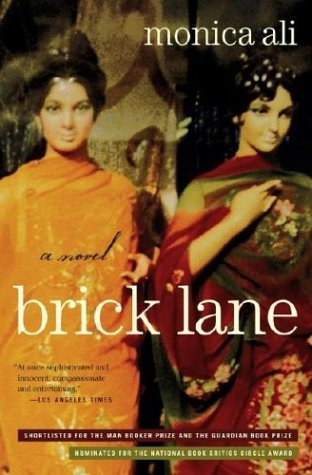
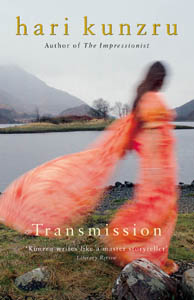
Next week, check back with Kitabkhana for "Curry Covers Two: Boats and Buildings". Until then, we're sticking with saris, the Indian book jacket designer's Choice Number One. Posted by Hello


And...more curry cover saris! This one's fair enough, I guess, since it's called The Sari Shop. Posted by Hello


The post-pedicure curry cover. Note the sari. And the model's very clean toenails. Posted by Hello


This is what the early curry cover must have been like. There's a sari, but it's discreet. Posted by Hello

Sunday, November 21, 2004

An offer I can't refuse

From Rohit Gupta, Bombay-based blogger: "I'm writing a blognovel. If you like a quotation from this novel, tell me about it. I will link that text, less than 50 words, to your blog or website. In return, you use that quote as a link to my novel on your site. It's a gift-exchange system, and that simple. After this, you own that quote. I own nothing, and nothing owns me."
As you surf through the novel, stray lines come into focus; lines someone else has linked to, that will take you to some stranger's website or blog. If Le Spirale Fantastique takes off, Gupta's "book" will be something like a living tapestry of winking lines connecting homesteads, web diaries, poetry blogs, other works in progress, little green flags popping up all over his text to say nothing more than "I was here, I read this". It's like notes in the margin of a secondhand book. Or linking hands in a crowd of strangers. A moment of contact that may or may not be meaningful, but that's, well, kind of fun.
Here's the quote I'd like to... rent? own? Let's just stick with "link to".
“Bengalis. I hate Bengalis,” says Sharma, finally relieved at speaking what he feels, “You smell of rotten fish and your oily hideous faces, your threadbare moralizing of everything, your fake cultural pride, it sickens me. Not since Tagore ( and you let common thieves steal his Nobel medallion) have you had an icon, not since the subway a sign of progress."

Maximum Mehta

I wish I'd had the nous to read this piece by Suketu Mehta before being mugged, with extreme politeness, in phoren lands. Next time someone in a dark corner of the globe asks for my wallet, I'm going to sing 'Ichak dana pichak dana' at them. (I know what they're going to do with the cash and small change, but what on earth are they going to make of the picture of my favourite cat, she of the orange fur, which had travelled around for years in the coin pocket, attached with a pink Bandaid to a picture of Che?)

Suketu Mehta on Bollywood, from The New York Times (*):
"The Indian film industry has penetrated into vast, and unlikely, areas of the globe; a hit Hindi movie will be dubbed or subtitled in a dozen foreign languages -- French, Mandarin, Malay. In New York, whenever I get a haircut, I'm confident of getting a discount if the hairdresser is from the former Soviet Union. Indian movies became popular there beginning in the 1950's. The Soviets gave us arms; we gave them our kitsch movies in return. Israelis watch them. Palestinians watch them. Indians and Pakistanis watch them. Dominicans and Haitians watch them. Iraqis watch them. Iranians watch them. In a building full of immigrants in Queens, an Uzbek man once cornered me in a dark stairwell. I'd been mugged before, and I thought, Oh, no. As he towered over me, he started singing, "Ichak dana bichak dana, . . . " a Bollywood standard from the 50's.
All these people watch Bollywood movies because the stories they tell are pre-cynical. Bollywood believes in motherhood, patriotism and true love. Hollywood is too ambivalent about family for their tastes. My friend Abdelkader, a Moroccan writer who grew up in the Netherlands, told me why Moroccans watch Hindi movies: 'We like that, in the end, everyone bows down and touches the mother's feet.'"

This week's NYT has a review of Suketu's Maximum City by Akash Kapur:
"...Mehta's most impressive skill lies not in his documentary prowess but in the psychological acuity of his writing: we come away from his encounters feeling we know the inner lives of the people he has depicted. In this sense, ''Maximum City'' is more than a consideration of the material limits on urban living; it is a profound meditation on the existential (and even spiritual) longings that persist despite those limits.
There is, for example, the dancing girl who dares to dream of escaping her sad existence in a seedy bar by winning the Miss India beauty pageant. And then there's the unemployed young migrant worker from Bihar, one of India's most backward states, struggling to establish a career as a poet. Mehta may ask why anyone would come to Bombay, but people like these have an answer: The cramped city still gives them room to dream, still allows them to live, as Mehta puts it, ''closer to their seductive extremities than anyone I had ever known.''
Alongside the cops and terrorists and call girls, there's another character seeking his seductive extremity: Mehta himself. Both a public and an intensely private book, ''Maximum City'' is not just about a city but also about one man's search for himself in that city."

Saturday, November 20, 2004

The Lonely Death of Pastor Dantica

In an interview she gave shortly after writing The Dew-Breaker, Edwidge Danticat spoke of growing up in Haiti with her aunt and uncle and how painful the separation was when she left at the age of 12 to join her parents in America. She spoke of learning to read when she was very young, of how her uncle, who worked in a school, would bring her books. Pastor Dantica--Edwidge's family acquired the extra 't' via a misspelling on an official form, ironically--died this week in US custody after fleeing from Port-au-Prince and applying for an asylum seeker's status.
"It is my nightmare that he died alone handcuffed to a bed," Edwidge told AP's Sam Dolnick.
Joseph Dantica started vomiting three minutes into an asylum hearing, after complaining that his medicine had been taken away. He died the next day; no one from his family was allowed to see him.
If that didn't make you angry enough, read this Sun-Sentinel report:
"As his family mourned, new details emerged of Dantica's final days at Krome. Dantica's son Maxo, who traveled with him to the United States, said Krome personnel took two prescription drugs from Dantica -- used to control his blood pressure and an inflamed prostate. The assertion contrasts a written statement by the Department of Homeland Security that said Dantica had "no legitimate prescribed medication" with him, but was carrying a folk remedy.
Maxo Dantica acknowledged his father used a bottled herbal mixture "for strength," which he said also was confiscated.
'They took his medicine away in front of me. Some doctor came and said, `He can't have that,'" Maxo Dantica recounted. "I begged them not to take it and I tried to warn them he might collapse, he might die. And the doctor said, `So he'll die.' He said it like a joke, but the joke came true."
As for the fine, honourable, caring souls over at Homeland Security, this is what they produced instead of an apology:
"Homeland Security rejected any responsibility for Dantica's death. 'Mr. Dantica died of pancreatitis while in Homeland Security custody, which an autopsy by the Miami-Dade County medical examiner's office revealed as a pre-existing and fatal condition,' the department said.
It added that it was 'unfortunate' that he died during the asylum interview. 'We understand his family's grief, but there is no connection between the pre-existing terminal medical condition he had and the process through which he entered the country.'
Some of Edwidge Danticat's work has dealt with the pains and trials of immigration, the constant doubts about whether it's worth exchanging a familiar tyranny for alien tribulations. Her uncle left Haiti because he had to: his church had been burned down the week before and he felt his life was in danger. He may have envisioned dying at the hands of torturers and murderers, but I don't think he or anyone in his family ever imagined that it would be in the US.
Robert Birnbaum sent a link to the Human Rights First page, where you can "call for an immediate investigation into this case and the Department of Homeland Security's broader policy of targeting Haitian nationals for immigration detention". The Babu usually doesn't encourage petition activism; but please, take a moment to sign this one.

Scots whae hae etc

"Divide-and-Rule is an old British sport," Ram Guha said before launching a tirade against William Dalrymple. (This is a particularly unkind cut--Dalrymple is Scottish and given the Scots perspective on the English through history, he can't have enjoyed being lumped in with the British!)
As expected, Dalrymple has a rejoinder this week--scroll down the Letters page:
"I usually rather enjoy Ramachandra Guha's slightly demented diatribes against his fellow writers, but since it is now my turn to be the target of his ire, I feel that I should at least point out that he misquotes and misrepresents me no less than four times in as many paragraphs."
Ooh, literary spats. It's been a while since the last really decent one. Someone asked the Babu recently, "Where do you stand on Dalrymple?" The only correct answer to this question is not on the man's head, stomach or other sensitive spots if I can help it.

A rush of Rushdies

Sanjay writes in to say:

"A search on Amazon's British website reveals at least
two upcoming books by Salman Rushdie next year:
'Careless Masters' (Hardcover,Jonathan Cape, September
1, 2005) and 'Parallelville' (Vintage Paperback, April
6, 2006).
Meanwhile, the Arts Telegraph's Literary Life column
of October 26 mentions that Rushdie's new book,
entitled 'Shalimar The Clown', will be published by
Jonathan Cape in autumn 2005.
Three books in one year alone? Talk of walking in the
footsteps of Erle Stanley Gardner..."

Make that four. There's also an entry for The Enchantress of Florence.
I'd have guessed that at least one or two of these books are compilations of his
journalism, except that they're all listed under "fiction". So now I'm confused.
Are there two Salman Rushdies out there? Or is the One of the Fatwa experiencing a sudden burst in creative activity?

Sunday, November 14, 2004

How to um, handle critics

From John Masters' 'Bugles and a Tiger', without comment:
"Three or four times a day we passed the long string of camels... They got on everyone's nerves.
Lance-Naik Dhansing of the buglers, a man very close to the animal in the directness of his feelings, did what the whole battalion would have loved to do, and showed in the doing a very true Gurkha humour. Sent with a message from the very back to the very front of the column, he swung out and began to hurry along beside the camels. As he went he leaped up and tweaked each male animal's testicles. The loads on our backs became as nothing from that moment, and as for me, apart from the satisfaction of second-hand catharsis, I shall never forget the sudden alteration of expression on each camel's face as Dhansing reached its hind end. Camels wear a conceited and abominably supercilious look, because it was into a camel's ear alone that Mohammed whispered the hundredth name of God.
The memory of those ungainly beasts starting forward, the expression on their faces changing from pompous omniscience to alarmed outrage, has often made me wish to introduce Dhansing among a roomful of literary critics. I am sure he would see the resemblance."

Always nice to be noticed

Even if it's in a slightly paternalistic way:
"As for the further spread of English, much will depend on what happens in India, a subcontinent of countless languages and dialects. The British promoted Hindi as a common language for India. But under mid-19th-century reforms, English was promulgated as the language of administration. Educated Indians today speak and write English fluently, and it is spreading faster in India than in any other country. Indians, even those from poor families, recognize English to be their passport to affluence, not least through telephonic outsourcing. Today millions earn their living by speaking English."
And apparently we're giving the Chinese a helping hand.

Whitbread and butter roundup

The Whitbread shortlists have been announced:

Best novel:
Kate Atkinson - Case Histories
Louis de Bernieres - Birds Without Wings
Alan Hollinghurst - The Line of Beauty
Andrea Levy - Small Island


First novel:

Susanna Clarke - Jonathan Strange & Mr Norrell
Richard Collins - The Land as Viewed from the Sea
Susan Fletcher - Eve Green
Panos Karnezis - The Maze

I'm feeling too lazy to do a proper news roundup, but the competent souls at The Complete Review did a pretty thorough job. As usual.

Saturday, November 13, 2004

Author versus author

William Dalrymple reviewed Pankaj Mishra's An End To Suffering for Outlook recently: "Few writers are as well qualified—at least in a literary sense—to tackle the tricky task Mishra has set himself. Over the last few years he has established himself as one of the finest essayists of his generation. His reviews, political analysis and travel writing in Granta, the TLS and especially the New York Review of Books have revealed him to be a commentator who can write with equal skill on fiction, politics and history, and whose fine measured Naipaulian prose is backed with a restless intelligence and astonishingly wide reading. Yet while he can write with authority on the latest trends in international fiction and politics, he knows mofussil India with as much intimacy as any other major Indian writer in English.
In a field still dominated by the St Stephen’s mafia and the Doon School diaspora, Mishra is an outsider. He was born in Jhansi and grew up in dusty railway colonies around Uttar Pradesh, before taking a degree in the decaying anarchy of Allahabad University. In contrast to the optimistic platitudes of a diaspora writer like, say, Sunil Khilnani—educated abroad and clearly knowing nothing of the grim reality of the boondocks of Bihar—Mishra does not lecture the world about South Asia from the sanitised safety of an East Coast campus. Instead, he writes as a man who really knows, from hard experience, the provincial India he writes about and in which he still lives for most of the year."
Ramachandra Guha took exception to some of Dalrymple's statements. His riposte has been published in this week's issue of Outlook (we'll link as soon as the new issue becomes available online):
"Dalrymple's argument is mischievous as well as wrong-headed. His dig at the 'Doon School diaspora' is calculated to stimulate prejudice and envy among his readers, sentiments that would quickly disappear were the category made more specific. For the major diasporic writers who studied at the Doon School are Vikram Seth and Amitav Ghosh. Both have displayed in good measure the writerly qualities Dalrymple says he prizes: honesty, hard experience, intelligence and learning..."
If you go by the principle that you should judge a man by the calibre of his enemies, I'd say Dalrymple's just gone up a notch. Farrukh Dhondy attempted to attack his essay on Naipaul's weak grasp of history in Tehelka recently, but not with much skill. Guha is a far more erudite opponent.

On the other hand...

"In regards to my little dispute with the Ayatollah Khomeini, let me point out that one of us is now dead. The moral is, don't mess with novelists."
Salman Rushdie, addressing students at Princeton.

For no reason, a poem

Over the years, the Babu and his partner have learned to dread the onset of winter. There's something about the season, the first early crisp cold, that brings on death, especially in the very old and the very ill, and this year has been no different.
It's been a time of cremations, of saying goodbye to friends and relatives who belonged to another generation. The news of Iris Chang's death came on the heels of a day dedicated to last rites. So I turned to Hikmet. Just to remind myself.

From Nazim Hikmet's 'Things I Didn't Know I Loved'


it's 1962 March 28th
I'm sitting by the window on the Prague-Berlin train
night is falling
I never knew I liked
night descending like a tired bird on a smoky wet plain
I don't like
comparing nightfall to a tired bird

I didn't know I loved the earth
can someone who hasn't worked the earth love it
I've never worked the earth
it must be my only Platonic love

and here I've loved rivers all this time
whether motionless like this they curl skirting the hills
European hills crowned with chateaus
or whether stretched out flat as far as the eye can see
I know you can't wash in the same river even once
I know the river will bring new lights you'll never see
I know we live slightly longer than a horse but not nearly as long as a crow
I know this has troubled people before
and will trouble those after me
I know all this has been said a thousand times before
and will be said after me

I didn't know I loved the sky
cloudy or clear
the blue vault Andrei studied on his back at Borodino
in prison I translated both volumes of War and Peace into Turkish
I hear voices
not from the blue vault but from the yard
the guards are beating someone again
I didn't know I loved trees
bare beeches near Moscow in Peredelkino
they come upon me in winter noble and modest
beeches are Russian the way poplars are Turkish
"the poplars of Izmir
losing their leaves. . .
they call me The Knife. . .
lover like a young tree. . .
I blow stately mansions sky-high"
in the Ilgaz woods in 1920 I tied an embroidered linen handkerchief
to a pine bough for luck

I never knew I loved roads
even the asphalt kind
Vera's behind the wheel we're driving from Moscow to the Crimea
Koktebele
formerly "Goktepé ili" in Turkish
the two of us inside a closed box
the world flows past on both sides distant and mute
I was never so close to anyone in my life
bandits stopped me on the red road between Bolu and Geredé
when I was eighteen
apart from my life I didn't have anything in the wagon they could take
and at eighteen our lives are what we value least
I've written this somewhere before
wading through a dark muddy street I'm going to the shadow play
Ramazan night
a paper lantern leading the way
maybe nothing like this ever happened
maybe I read it somewhere an eight-year-old boy
going to the shadow play
Ramazan night in Istanbul holding his grandfather's hand
his grandfather has on a fez and is wearing the fur coat
with a sable collar over his robe
and there's a lantern in the servant's hand
and I can't contain myself for joy
flowers come to mind for some reason
poppies cactuses jonquils
in the jonquil garden in Kadikoy Istanbul I kissed Marika
fresh almonds on her breath
I was seventeen
my heart on a swing touched the sky
I didn't know I loved flowers
friends sent me three red carnations in prison

I just remembered the stars
I love them too
whether I'm floored watching them from below
or whether I'm flying at their side

I have some questions for the cosmonauts
were the stars much bigger
did they look like huge jewels on black velvet
or apricots on orange
did you feel proud to get closer to the stars
I saw color photos of the cosmos in Ogonek magazine now don't
be upset comrades but nonfigurative shall we say or abstract
well some of them looked just like such paintings which is to
say they were terribly figurative and concrete
my heart was in my mouth looking at them
they are our endless desire to grasp things
seeing them I could even think of death and not feel at all sad
I never knew I loved the cosmos

snow flashes in front of my eyes
both heavy wet steady snow and the dry whirling kind
I didn't know I liked snow

I never knew I loved the sun
even when setting cherry-red as now
in Istanbul too it sometimes sets in postcard colors
but you aren't about to paint it that way
I didn't know I loved the sea
except the Sea of Azov
or how much

I didn't know I loved clouds
whether I'm under or up above them
whether they look like giants or shaggy white beasts

moonlight the falsest the most languid the most petit-bourgeois
strikes me
I like it

I didn't know I liked rain
whether it falls like a fine net or splatters against the glass my
heart leaves me tangled up in a net or trapped inside a drop
and takes off for uncharted countries I didn't know I loved
rain but why did I suddenly discover all these passions sitting
by the window on the Prague-Berlin train
is it because I lit my sixth cigarette
one alone could kill me
is it because I'm half dead from thinking about someone back in Moscow
her hair straw-blond eyelashes blue

the train plunges on through the pitch-black night
I never knew I liked the night pitch-black
sparks fly from the engine
I didn't know I loved sparks
I didn't know I loved so many things and I had to wait until sixty
to find it out sitting by the window on the Prague-Berlin train
watching the world disappear as if on a journey of no return

19 April 1962
Moscow

(Hikmet died of a heart attack in Moscow, barely a year after he wrote this.)

Iris Chang, RIP

The author of 'The Rape of Nanking' was researching the Bataan Death March days before she committed suicide. Earlier news reports said Chang died "of a self-inflicted gunshot wound", which is one of the most grotesque euphemisms I've ever encountered.
The SF Chronicle reports: "When author Iris Chang caught a plane to Kentucky in August to plunge into her next book project, she was already exhausted and depressed, her husband said yesterday.
Planning to interview American survivors of one of the most brutal chapters of World War II history, the Bataan Death March, Chang was no stranger to the horrors of war. Her passion for human rights had resulted in her best-known book, the 1997 bestseller, 'The Rape of Nanking: The Forgotten Holocaust of World War II.'"
Paul Wood takes a closer look at Chang's capacity for empathy and the toll that years of listening to stories from the abyss might have taken on her.
In an interview she gave shortly after The Rape of Nanking came out in 1997, Chang said, "The pain of writing the book would frighten me at moments when I'd least expect it. I was trying very hard not to let these atrocities poison the other aspects of my life." In the same interview, she cited Rwanda, Bosnia and Indonesia: "We still have in the human species the same dark impulses that launched the Rape of Nanking." One of her achievements as a writer was to shine light into the dark places. It cannot have been easy.

Monday, November 08, 2004

There's gold in them thar hills

The DNA of Literature, also known as The Paris Review interviews, will soon be available online. (Link via Chekov's Mistress)
"Now the Paris Review Foundation proposes to make this vast archival resource—what has felicitously been referred to as the DNA of Literature—available online, for free, to anyone who visits the Paris Review website."
One of my pals took interviews very, very seriously when she was a greenhorn journo. She'd go back to the Big Noise she was profiling four different times, wait for the right moment, etc etc. Then a wiser and more cynical journo set her straight: "What you wasting your time for 500 words? Screw this Paris Review shit, get me three quotes and a tagline."
Which explains a lot about contemporary Indian journalism.

Agentspeak

Link via Maud:
From David Milofsky's piece on literary agents:
"The following glossary, offered with tongue in cheek, might help literary hopefuls decipher messages received from agents in response to their work:

Interesting - Boring
Has potential - Amateurish
Moving - Show it to Mom
Needs work - Hopeless
Mid-list - Won't sell
Intelligent - See "interesting"
Ambitious - Too long
Spare - Too short
Poetic - Insomniacs only
Plot-driven - Superficial
Excellent - Possible, with a rewrite
Cinematic - Unreadable
Marketable - People will buy anything
Challenging - See "poetic"
At this time (as in, we can't use it at this time) - Never
Experimental - In your dreams
Character-driven - No story
Novel of ideas - No one will read it
Talented - How did you get in here?"

Eek, it's an omen

And just as we get used to four more bloody years with Bush, a Wisconsin school decides that Darwin isn't enough:
"The city's school board has revised its science curriculum to allow the teaching of creationism, prompting an outcry from more than 300 educators who urged that the decision be reversed."
What the heck. I wouldn't mind so much if they promised to teach the "turtles all the way down" theory alongside.

Minding your languages

Ram Guha on a different kind of two-language theory:
"Between 1920 and 1980, or thereabouts, Bengali and Marathi were the only bilingual intellectual cultures in the world. The French write, think and speak exclusively in French; the English, in English. Yet in Pune and Calcutta, original works of scholarship were being written and discussed both in English and in the language of the bazaar."

De-sist

Shobhaa De, often referred to as "India's (fill in the blanks) Jackie Collins/ Danielle Steele/ Nora Roberts/ all of the above", is coming out with a new book--Spouse. We at Kitabkhana barely escaped drowning in the slushy prose of Sisters and Starry Nights, so we refuse to read this, but as a mark of, well, something or the other, we're compiling:

A List of Headlines Featuring Shobhaa De That We Never Want To See Again (No, They Weren't Funny The First Time Around)

1. A Hard De's Night
2. Long De's Journey Into Night
3. Every Dog Has His De
4. De in the Life
5. Shobha's De Out
6. Remains of the De
7. Sultry De
8. Society De-ity
9. Independence De
10. A Brighter De
11. News of the De
12. D-De

From Amardeep, the ones that got away.

"This book is a De Mare"

"No De-mand for De"

"She Writes Something New Every De"

But seriously...

The Hindu Literary Review for this month is up--highlights include an essay on cities in the literary imagination, Pradeep Sebastian on the lack of public libraries in India, Dilip D'Souza on Suketu Mehta's Maximum City, and Shiv K Kumar on the late Mulk Raj Anand.

From Kumar's emotional lament, an excerpt:
"Let me share with the readers his incisive assessments of Salman Rushdie, V.S. Naipaul, Nirad Chaudhuri and Ruth Prawer Jhabvala. In his letter of August 7, 1982, [Mulk Raj Anand] wrote:
"The question of Salman Rushdie's novel does not arise as far as I am concerned. Rushdie is a clever young man (perhaps too clever by half as the English say). He writes very eloquently in the English language but in Midnight's Children, he is aping the recent Americans by disembowelling his mother, painting his grandmother as a scheming old witch, his grandfather as a burglar, his father as a mere crook, and he himself as superior to all his colleagues. I suppose he is brighter than the others, but in the kind of way in which the average advertising copywriter is brighter than every other copywriter. India appears to be a spittoon to Salman Rushdie. I suppose it is as it was a vast sewage to Katherine Mayo before the war, or it is the "Continent of Circe" to that third-grade actor Nirad Chaudhuri, as it is "an Area of Darkness" to V.S. Naipaul, as it is "Heat and Dust" to Ruth Jhabvala..."
I found it fascinating that Mulk Raj Anand pillories Rushdie for the crime of disrespect. It reveals far more about attitudes so deeply ingrained in Indian readers--and perhaps some writers--than it does about Midnight's Children. I've often heard people complain about so-and-so writer--usually the good ones--that he or she hasn't been polite enough, that they shouldn't have written so openly of family, or country, or community. There was so much in Midnight's Children: so much energy, so much in the way of ferocious attachment to Bombay and to India, so much need to write a passionate draft of history as it's never set down in the textbooks. And Mulk Raj missed all that, because in his code, Rushdie was rude to his elders. Wow.

Sunday, November 07, 2004

Semantic hygiene and other matters of terminology

If I was pressed for an example of a tactful sentence, this would be it. From Vilyanur Ramachandran's elegy to Francis Crick:
"He had very little patience with orthodox philosophers. He felt they became too prematurely trapped in matters of terminology. I am reminded of a seminar on consciousness he gave at the Salk in the eighties. A philosopher—whose name politeness forbids me from mentioning—raised his hand and said 'But Dr Crick … you are attempting to solve the so-called problem of consciousness yet you haven't even bothered to define it...can you clearly define what you are talking about?'"
"Crick's reply: 'My dear chap, there was never a time in the pre-DNA era when a lot of us biologists sat around the table and said 'Let us first clearly define life before we explore it'. We just went out there, forged ahead and found out what it was. It's no doubt good to have a rough idea of what one is talking about but matters of terminology are best left to philosophers who spend most of their time on such things. Indeed clear definitions often emerge from empirical research. We now no longer quibble over questions like is a virus really alive'. Semantic hygiene, Crick felt, was largely a waste of time."

Ramachandra Guha, WMD

In India, historian, biographer and cricket writer Ram Guha is considered one of our finest non-fiction writers. To a paranoid US security official, he's a weapon of mass destruction. Invited to speak at Berkeley and Oberlin after he'd spent a week lecturing at Vancouver airport, he was denied entry into the US.
"Why was I stopped? One reason might have been my jhola, a patch of mirrorwork on red which must have been as dangerously exotic to McCullough as it was appealing to my friend Mohammad. Another, certainly, was the letter of invitation from Oberlin, which specified a fee for my lectures which greatly angered McCullough. "How can they pay you so much," he said more than once, adding, "And for teaching history." (Also relevant perhaps was my place of residence, a city much demonised in the presidential campaign for "stealing American jobs"). Finally, there was a general paranoia in the week before the elections, fuelled in this particular instance by a daily target of suspects to be detained."
Ram Guha joins a long and distinguished list of people who've been harassed by US airport security officials: Rohinton Mistry (who was stopped and searched so many times at US airports during a book tour that he called the whole thing off), Senators Ted Kennedy and John Lewis (their names appeared, separately, on a government terrorist watchlist), Iranian film director Jafar Panahi (he was chained)... To the best of my knowledge, none of them had, have or will have any plans to blow up the United States of America, though if you offer them a .303 and the chance to pot a US airport security offical, all bets are off.

And Yet The Books etc

In my line of work, I'm frequently accosted by people who assume that books, and reading, are peripheral activities. That what politicians do is somehow more important; that book pages and book review sections are for journalists to outgrow; that writers do not need to be accorded the same seriousness as, say, economists. I usually get my own back by pointing out that my working day is a) entertaining b) fun c) spent on a comfortable couch d) fun e) uninterrupted by cretins f) did I mention the "fun" bit yet?
The Reading Experience has a far more articulate perspective.
"Books--fiction more specifically--seem trivial in comparison to politics and political awareness only if you've really invested most of your intellectual resources in the notion that political movements and ideas finally determine the degree to which serious engagement with ideas can be made at all, that everything else curious and creative people might find worthwhile must be subordinated to "political critique" or else it's just so much fluff."

What about octarine, then?

Link found on Bookslut: "For one amazing week in November, Adobe Bookshop in San Francisco has agreed to allow its estimated 20,000 books to be reclassified by color. Shifting from red to orange to yellow to green, the books will follow the spectrum continuously, changing Adobe from a neighborhood bookshop into a magical library—but only for one week."
It's magnificent, and easy on the eye, but that installation artist chappie isn't setting foot in my home.
From Anne Fadiman's Ex Libris:
"Some friends of theirs had rented their house for several months to an interior decorator. When they returned, they discovered that their entire library had been reorganized by colour and size. Shortly thereafter, the decorator met with a fatal automobile accident. I confess that when this story was told, everyone around the dinner table concurred that justice had been served."

Saturday, November 06, 2004

No-Mo Na-No-Blog-Mo?

Blogger is celebrating National Novel Writing Month. (I want a National Navel Gazing Month. February would do just fine.) You're invited to register here, create a blog, and submit your novel, and just like that, you're a published author.
The thing is, when God made editors, She did it for a reason. (Now Barrabas was a publisher, but we'll cut editors some slack, shall we?)
The one thing that all the submissions on NaNoBlogMo have right now is courage: the Babu thinks it was Edna St Vincent Millay who likened writing to the act of pulling your pants down in public. But talent? Some of what's there is still getting past the selfconscious stage. One, Lisa W's Hardcore Matinee, is a phantom novel--so far, nothing exists but the title. The rest is the stuff of proofreading nightmare: one story has a character whose head is "peaking" above the bedclothes; another has a young girl who's been sexually violated--"rapped", in her words.
I dunno. Maybe just the act of posting a novel in a forum where bored Babus can read it and slam it will be enough to awaken the sleeping literary lion in aspiring novelists. Maybe it's just good clean fun. Maybe as those brave writers out there continue to write, reader comments or just seeing their stuff on a pretty screen will inspire them to do better. Maybe the next big thing is actually going to post a heartbreakingly staggering work of genius. Or maybe this is going to turn into the world's largest slush pile.

Thursday, November 04, 2004

Childe Woland to the Dark Tower comes

If you haven't read Mikhail Bulgakov, here's a good reason: you have got to love a writer who can get the Church all hot and bothered 64 years after his death.
The Master and Margarita is being filmed (got to see that one), and the Russian Orthodox Church is not pleased.
"A senior Orthodox official told the Guardian that cinema was "not an adequate means of interpreting the Gospel" - icons were more appropriate. Father Mikhail Dudko, head of the secretariat for church and society, said: 'We Christians know four gospels, and in Bulgakov's book we see a kind of fifth: a gospel narrated by Satan, [who is called] Woland in the book. And the interpretation is in Satan's favour. Our reaction to such an interpretation can be nothing but negative.'"
Drop by the "multimedia site" created by Kevin Moss in homage to The Master and Margarita.

Nancy Drew's Godfather...and Godmother

Before the big boys brought the pie-chart into publishing, Edward Stratemeyer--the man behind the Hardy Boys, Nancy Drew et al--figured out how to give the public what it didn't know it wanted.
From The New Yorker:
"Stratemeyer would come up with a three-page plot for each book, describing locale, characters, time frame, and a basic story outline. He mailed this to a writer, who, for a fee ranging from fifty dollars to two hundred and fifty dollars, would write the thing up and—slam-bang!—send it back within a month. Stratemeyer checked the manuscripts for discrepancies, made sure that each book had exactly fifty jokes, and cut or expanded as needed. (Each series had a uniform length; the standard was twenty-five chapters.) He replaced the verb “said” with “exclaimed,” “cried,” “chorused,” and so forth, and made sure that cliffhangers punctuated the end of each chapter—usually framed as a question or an exclamation. Each series was published under a pseudonym that Stratemeyer owned."
If you're wondering who Carolyn Keene really was, Geoffrey Lapin investigated the subject pretty thoroughly in the late 1980s.
"Carolyn Keene was Edward Stratemeyer. Another source says that she was Harriet Adams. Yet others say that she was Edna Squire, Walter Karig, James Duncan Lawrence, Nancy Axelrad, Margaret Scherf, Grace Grote, and a plethora of others. What years of research have yielded is the fact that the one author who established both the original character of Nancy Drew and the characterization formula that has kept the young detective so popular is one Mildred A. Wirt Benson. Mrs. Benson had created a heroine exhibiting the values and personality that she herself had shown as a student at The University of Iowa."
Salon.com ran a brief interview with Benson in 1998.

Getcha resistance buttons here

This made me feel just a shade better about Bush winning the elections. Arundhati Roy has already said that who won the election was a matter of indifference to her--it's just a question of who gets to be the next commander-in-chief of the Empire we call the States. And she's suggesting a civil disobedience movement against the new economic colonisers.
I know many in India can't stand Saint Arundhati. Might this review by Lachlan Malloch change your mind?
"..Her sense of humour and alertness to the absurd rescue some of our sanity, by helping us laugh at an insane world.
In another way still she recalls a little of the old Italian man in Catch 22 during the Second World War. He pities the US empire because he’s calmly confident that humanity will endure, outlasting an empire whose internal contradictions and greedy overreach will eventually see its power drain away."

Update: The text of her speech is here. Ignore the first five infuriatingly arch paragraphs--"My sources inform me that Dr Ashrawi had a picket all to herself. This is discriminatory....May I formally request the Foundation to organize a picket against me after the lecture?"--and the mandatory "who, little old me?" bits. The good stuff's down below:
"So Iraq has been 'liberated.' Its people have been subjugated and its markets have been 'freed'. That's the anthem of neo-liberalism. Free the markets. Screw the people."

"Booksellers must not openly read"

Every few days, I meet someone who wants to open a bookstore. Or someone who thinks, as I did in my college years, that there could be no more romantic way to enter the workforce than as a bookseller. (I had visions of gently steering Ayn Rand fanatics towards Nabokov, of pointing incorrigible Richard Bach fans in the direction of Marcus Aurelius on the principle that if you really want self-help schmaltz, you should aim for the top. But then I also wanted to end world hunger and poverty and bring peace to every nation. Ah, youth.) Now Delhi's an anomaly; unlike the rest of the world, it hasn't been Barnes and Nobbled or Waterstoned out of its mind. And I do know one lovely lady in Canada who's getting a kick out of her job and who still believes that "bookstore" equals "wonderland".
For the rest of you romantics, Anthony Bonanza has the reality check:
"We were all preparing to leave because no matter how good the people are around you, a chain bookshop is a tragedy. It is a place where (at best) lives and dreams are put on hold, but sometimes get trapped forever.
...[A] horrible commercial reality is what chain stores exist in and bow to. There is no time for inspiration, no time for dreams, just the endless shovelling of crap at a resistant public."